
5 Best Matcha Face Washes
Matcha face washes can be appealing if you like green-tea-based skincare, but the featured ingredient is only one part of what makes a cleanser suitable for your skin.
The better way to choose is to look at the cleanser base, surfactants, fragrance, oils, clays, and overall after-feel, then match those features to your skin type and routine.
Matcha and green tea extracts can contribute antioxidant compounds to skincare formulas, but a rinse-off cleanser has brief contact with the skin, so cleansing performance and tolerability should come first.
These cleansers come in a wide range of gel, foam, cream, and clay-based formulas, so the overall performance depends more on the full ingredient list than on matcha alone.
A good matcha cleanser should leave your face feeling clean and comfortable without persistent tightness, burning, or excessive dryness.
Look for a formula that fits your skin type first, then treat matcha as a supporting ingredient rather than the main reason to buy.
So, what are the best matcha face washes?
The best matcha face wash is the one that suits your skin and cleansing needs. Creamier formulas may feel more comfortable on dry skin, foaming or clay-based formulas may appeal to oilier skin, and fragrance or essential oils can be a drawback for reactive skin. Matcha is a useful supporting ingredient, not a substitute for a well-balanced cleanser.
If your skin is reactive, review the ingredient list for fragrance, essential oils, exfoliating acids, or other ingredients you already know you do not tolerate, and introduce the cleanser gradually.
Below, we compare five matcha face washes by texture, cleansing style, supporting ingredients, and the skin types that may be most comfortable with each formula.
Matcha Face Washes At A Glance
- If you prefer a creamy cleanser: Lily Sado Matcha Made In Heaven may be the most relevant formula to compare.
- If you prefer a foaming cleanser: B LAB Matcha Hydrating Foam Cleanser offers a lighter, rinse-clean format.
- If you like clay for surface oil: SheaMoisture Matcha Clay To Cream may appeal more to oily or combination skin that tolerates clay well.
- If you want a mild, ingredient-focused option: Matcha Cloud by Blue Chemistry is worth comparing, especially if price is less important than formula preferences.
- If you want a richer botanical formula: Kumiko Matcha Luxurious Face Wash contains oils, cocoa butter, and orange essential oil, which may suit some dry skin but can be a drawback for very reactive skin.
Why Matcha?
Matcha is finely powdered green tea and naturally contains polyphenols, including catechins such as EGCG.
Green tea extracts are used in skincare for antioxidant and soothing potential, although the practical benefit depends on concentration, stability, vehicle, contact time, and the rest of the formula.
Topical matcha is not equivalent to drinking matcha, and a rinse-off cleanser gives any green-tea ingredients only brief contact with the skin before they are washed away.
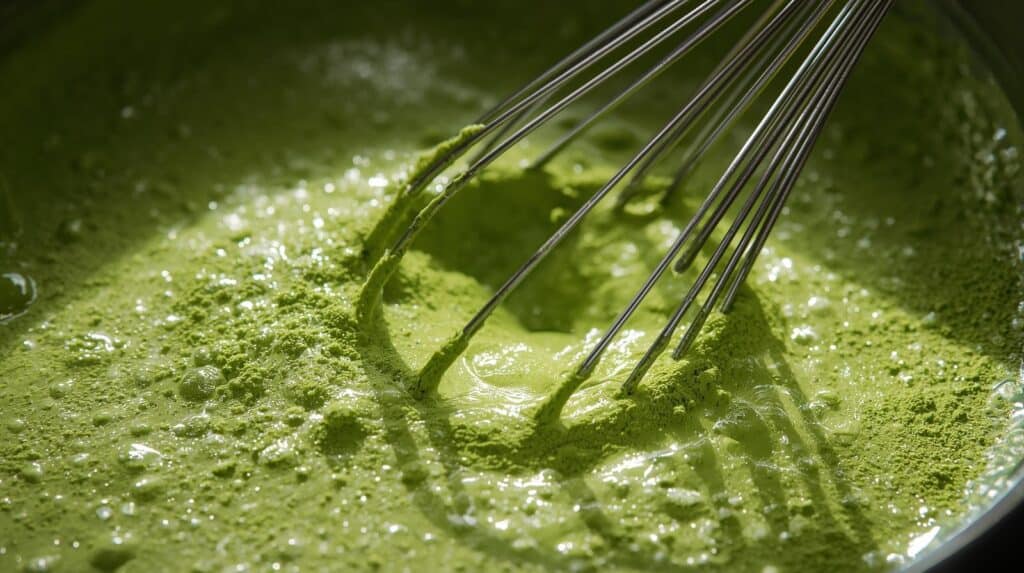
Matcha contains antioxidant catechins, including EGCG, but a matcha cleanser should not be expected to treat acne, bacterial skin conditions, or irritation on its own.
EGCG has antioxidant and anti-inflammatory activity in research settings, but rinse-off products have limited contact time and are not guaranteed to reduce wrinkles, hydrate all skin types, or suit every concern.
Features Of Matcha Face Washes
Cleanser Form
Matcha face washes come in gel, cream, foam, and clay-based formats. The format can give you a useful clue about after-feel, but the surfactant system and supporting ingredients matter more than texture alone.
Gel cleansers often suit people who prefer a lightweight rinse and want to remove oil, sweat, sunscreen, and everyday buildup without a rich residue.
If you are prone to clogged pores or acne, look for a cleanser that removes excess oil without stripping the skin. A face wash can support an acne routine, but it is not a substitute for proven acne treatments when breakouts are persistent.
Some gel cleansers suit oily or acne-prone skin, while gentler gels can also work for normal or combination skin.
Foaming cleansers can feel especially thorough on oily skin, but more foam does not automatically mean better cleansing or a harsher formula.
Some foaming cleansers can feel drying on sensitive or dry skin, while modern low-irritation foaming formulas may be much gentler.
They can work well as a second cleanse after makeup removal because surfactants help lift remaining oil, sunscreen, and cosmetic residue from the skin surface. Cleansers do not need to penetrate deeply to do this job.
Cream cleansers often contain more emollient ingredients and may leave dry or dehydration-prone skin feeling less stripped after rinsing.
If your skin feels irritated from over-exfoliation or frequent use of retinoids and acids, a gentler cream cleanser may be more comfortable.
A mild, fragrance-conscious cream cleanser can be a good choice while the barrier recovers, but no cleanser format is universally best for everyone.
Skin-Type Compatibility
Beyond texture, compare the surfactants, fragrance, essential oils, acids, clays, and emollients to judge whether the formula is likely to suit your skin and the rest of your routine.
Packaging claims such as “for oily skin” or “for sensitive skin” can be useful starting points, but they are not guarantees of compatibility.
It also helps to know which ingredients your skin tends to tolerate well and which ones commonly trigger dryness or irritation for you.
For example, clay can absorb surface oil and may suit some oily skin types, but it does not “dry out” acne itself and may feel too stripping for dry or sensitive skin.
Formula Complexity
If matcha is the ingredient that caught your attention, keep expectations realistic: in a rinse-off cleanser, its role is likely to be supportive rather than therapeutic.
A shorter ingredient list is not automatically gentler or better. Overall formulation quality, cleansing performance, preservative system, and tolerability matter more than ingredient count.
People with sensitive skin may prefer fragrance-free formulas with fewer known irritants, although “simple” alone does not guarantee gentleness.
If you want additional features such as mild exfoliation, oil control, or extra emollients, a more complex formula may be useful, but cleansers still have limited contact time compared with leave-on skincare.
How To Choose A Matcha Face Wash For Your Skin Type
- Dry or dehydration-prone skin: look for a creamier cleanser or a mild gel/foam that does not leave persistent tightness. Emollient ingredients may improve after-feel.
- Oily skin: lightweight gels, foams, or clay-based formulas may feel more satisfying, but stripping the skin is not necessary for a good cleanse.
- Combination skin: prioritize a balanced cleanser that removes oil from the T-zone without making drier areas uncomfortable.
- Sensitive or reactive skin: fragrance, essential oils, and strongly exfoliating ingredients may matter more than whether the cleanser contains matcha.
- Acne-prone skin: choose a cleanser you can use consistently without irritation. A face wash can support an acne routine, but persistent acne usually needs more than a botanical rinse-off cleanser.
Best Matcha Face Washes
| Rank | Product | Key Features |
|---|---|---|
| 1. | Lily Sado Matcha Made In Heaven | Clarifying, vitamin-rich, balancing |
| 2. | B LAB Matcha Hydrating Foam Cleanser | Hydrating, good for sensitive skin, low pH |
| 3. | SheaMoisture Matcha Clay To Cream | Probiotics, rich lather, has milk thistle |
| 4. | Matcha Cloud by Blue Chemistry | Super gentle, makeup removing, fragrance-free |
| 5. | Kumiko Matcha Luxurious Face Wash | Contains actives, rich in oils, vegan, avoid if you have nut allergies |
1. Lily Sado Matcha Made In Heaven
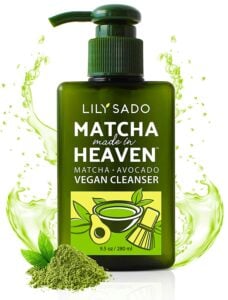
Matcha Made In Heaven is the creamier option in this roundup, combining matcha with avocado-derived and other plant-based ingredients.
The product is marketed around a “clean” ingredient profile, but “clean” is not a standardized safety term, and all cosmetic ingredients are chemicals regardless of whether they are natural or synthetic.
The brand markets the cleanser as vegan and cruelty-free and highlights some organic ingredients. If those attributes matter to you, check the current brand policy and formula before buying.
The formula highlights avocado and matcha as key botanical ingredients.
The matcha contributes antioxidant compounds, although this rinse-off cleanser should not be treated as an antibacterial acne treatment.
Avocado-derived ingredients may contribute emollients and antioxidants, but a cleanser cannot guarantee meaningful free-radical protection or vitamin delivery after rinsing.
This may appeal to people who prefer a creamier, more emollient cleansing feel. If you are very oily or sensitive to botanical-heavy formulas, compare the full ingredient list before assuming it will be the best fit.
If the product is labeled non-comedogenic, that can be helpful for acne-prone users, but it does not guarantee zero breakouts or that the cleanser will never feel drying.
2. B LAB Matcha Hydrating Foam Cleanser
South Korean skincare includes many low-pH and foaming cleanser styles, and the category ranges from very mild to more thorough cleansing formulas.
B LAB Matcha Hydrating Foam Cleanser is the most straightforward foaming option here for someone who wants a lighter rinse without moving to a clay-based cleanser.
This foam-based face wash can work as an evening cleanser to remove excess oil, sweat, sunscreen, and light makeup residue. It should not be expected to sterilize the skin or remove all bacteria.
The formula is positioned as hydrating for a foaming cleanser, but it cannot guarantee balanced oil production or “heal” the moisture barrier with every wash.
One useful feature is its mildly acidic pH, which may be more comfortable for some users than a highly alkaline cleanser.
The formula also includes amino-acid-based ingredients that can contribute to a milder cleansing feel, but they do not guarantee clear skin.
If the brand lists dermatologist testing, that can provide useful product information, but it does not prove that every person with sensitive skin will tolerate the cleanser.
3. SheaMoisture Matcha Clay To Cream
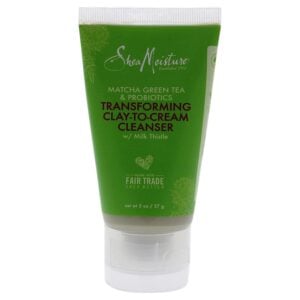
If you like clay-based cleansing textures, the SheaMoisture Matcha Clay To Cream formula may appeal particularly to oilier or combination skin types that tolerate a more oil-absorbing cleanse.
SheaMoisture is better known for haircare, but this cleanser uses a clay-to-cream texture in its skincare line.
The cleanser starts with a clay-like texture that can absorb some surface oil and help lift sweat, sunscreen, and residue during cleansing.
You may notice the temporary tight feel common with some clay formulas. Follow the directions rather than allowing it to dry excessively on the skin.
As you massage it with water, the texture becomes creamier and easier to rinse.
The creamier phase may make the cleanser feel less drying than a traditional clay mask, although results depend on your skin type.
4. Matcha Cloud by Blue Chemistry
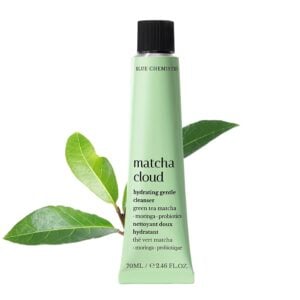
Matcha Cloud by Blue Chemistry may sit at a higher price point than some drugstore options, so its value depends on how much you prioritize its texture and supporting ingredients.
Whether it is worth the extra cost depends on how much you value the texture, packaging, and supporting ingredients.
Blue Chemistry markets this cleanser as vegan and cruelty-free and packages it in an aluminium tube and box. Check current brand disclosures if those claims affect your purchase.
The cleanser is positioned as mild and hydrating, but a rinse-off face wash should not be expected to treat redness, inflammation, dehydration, or acne by itself.
The formula includes probiotic-related ingredients, green tea, and matcha. These may support the overall feel of the formula, but cleanser probiotics are not proven to “rebalance” every skin type or produce miracle results.
5. Kumiko Matcha Luxurious Face Wash
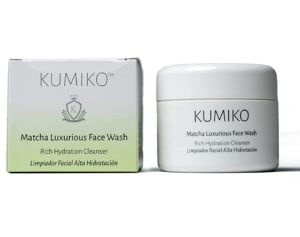
If you have dry skin, a richer cleanser that removes everyday residue without leaving the face tight can make the rest of your routine more comfortable.
Kumiko Matcha Luxurious Face Wash is one of the more ingredient-rich options on the list, so people with sensitive or fragrance-reactive skin should review the formula carefully.
The formula contains several oils and botanical ingredients, but it is not guaranteed to suit all skin types or all sensitive skin.
Alongside matcha, the formula includes orange essential oil, almond oil, sunflower oil, and cocoa butter. These can add emollience, while essential oils may irritate some sensitive users.
The oils and cocoa butter may leave the cleanser feeling more emollient, but a rinse-off face wash should not be expected to repair a damaged skin barrier on its own.
Mature or dry skin may appreciate a richer cleanser, although essential oils and other botanicals can still be irritating for some users.
This is not primarily an exfoliating cleanser, and its rinse-off ingredients should not be expected to meaningfully boost collagen production or skin elasticity.
Any temporary plumping after cleansing is more likely to come from hydration and emollience than from wrinkle prevention or collagen stimulation.
How To Use A Matcha Face Wash
- Wet your face with lukewarm water unless the product directions specify otherwise.
- Use a small amount of cleanser and massage it gently over the skin without aggressive scrubbing.
- Rinse thoroughly, then pat the face dry rather than rubbing.
- Follow with the rest of your routine, including moisturizer when needed and sunscreen during the day.
- If the cleanser repeatedly causes burning, persistent tightness, flaking, or increased irritation, reduce use or switch formulas.
Matcha Face Wash FAQs
Is Matcha Face Wash Good For Acne?
A matcha cleanser can remove oil, sunscreen, sweat, and residue, but matcha itself should not be treated as a proven acne medication. Persistent acne may need leave-on ingredients or professional treatment depending on severity.
Is Matcha Face Wash Good For Sensitive Skin?
It can be, but compatibility depends on the whole formula. Fragrance, essential oils, strong surfactants, clays, or exfoliating ingredients may be more important for sensitive skin than the presence of matcha.
Does Matcha Face Wash Brighten Skin?
A cleanser can make skin look fresher by removing oil and surface residue, but rinse-off matcha should not be expected to fade hyperpigmentation or create a major long-term brightening effect on its own.
Can You Use Matcha Face Wash Every Day?
Many gentle cleansers can be used daily, but frequency should depend on the formula and your skin. If a clay, foaming, or fragranced cleanser makes your face feel tight or irritated, less frequent use or a milder product may be more comfortable.
Final Takeaway
Matcha can be a nice supporting ingredient in a face wash, but it should not overshadow the basics. The most useful cleanser is one that removes what you need it to remove while leaving your skin comfortable enough to use consistently.
Choose among these formulas by cleanser type, fragrance and essential-oil content, oil-control level, richness, and your own skin response rather than assuming the product with the most matcha-related marketing will automatically perform best.
Related Articles
Can You Use Body Wash On Your Face?