
Partial Vs Full Balayage
Want brighter hair without an obvious stripe of regrowth? Balayage can give you a softer transition between your natural colour and lighter pieces.
The next decision is how much of your hair you want highlighted: a few strategic sections or dimension throughout the whole head.
That’s where partial versus full balayage comes in. The difference is mainly coverage and placement, not a completely different colouring technique.
Either service can look subtle or high-contrast. The finished effect depends on how light you go, how different the highlights are from your base colour, and where the colourist places them.
Like other highlighting services, balayage can be booked as a full or partial appointment.
A full service does not mean every strand is bleached, and a partial service does not necessarily mean exactly half your hair. Salon definitions vary, so ask which areas your booking includes.
However, what is the difference between a partial and a full balayage?
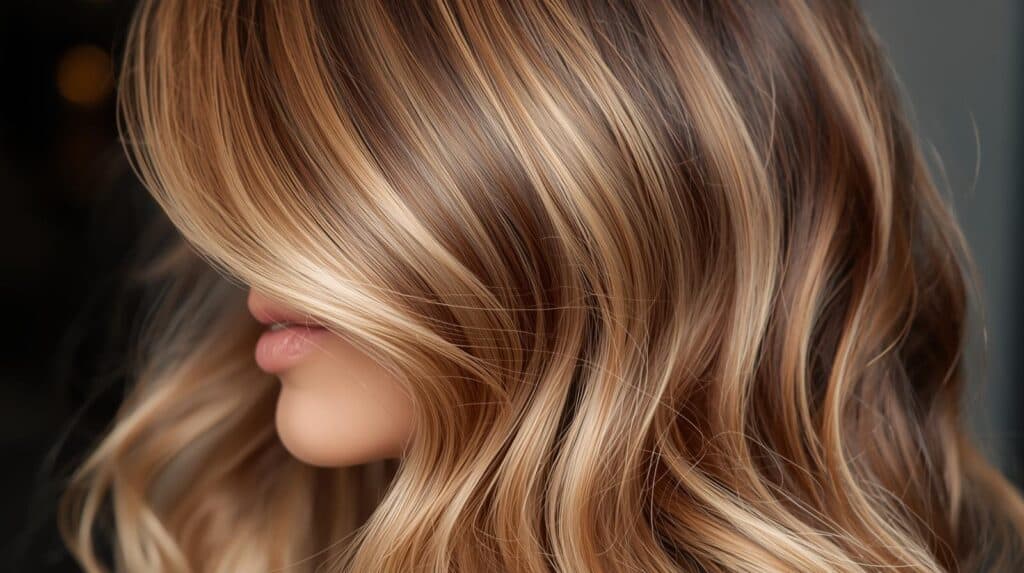
A full balayage places highlights throughout the head, including the back and lower sections. A partial balayage concentrates on selected areas, often the face frame, crown, or top layers. Choose full for brightness visible all around, or partial for a smaller change or a targeted refresh.
Both can grow out softly, but neither is maintenance-free. Lightened hair stays lightened, toner or gloss gradually fades, and your natural roots continue to grow.
Here’s how partial and full balayage compare on placement, cost, appointment time, upkeep, and how the colour looks when your hair is worn down or tied up.
What Is A Balayage?
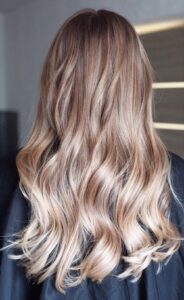
Balayage is a freehand highlighting technique in which a colourist paints selected sections to create a softer transition into lighter mid-lengths and ends.
Most balayage lightening services use a professional lightener. Toner, gloss, or colour may then be used to refine the shade, depending on your starting colour, previous colour history, and goal.
The painted placement can soften the look of regrowth. Traditional foil highlights can also be blended, so balayage is not the only way to avoid a strong root line.
The aim is often a sweep of brightness with darker pieces left between the highlights for dimension. Two balayage appointments can look very different because placement, saturation, contrast, and tone matter more than the service name alone.
The Balayage Application Process
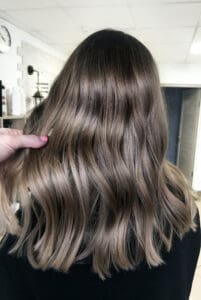
Your stylist should first assess your colour history, hair condition, and desired result before choosing products and a placement plan.
Lightener is commonly used to create brighter pieces. Previously dyed hair may lift differently from natural hair, so a reference photo is a starting point rather than a guaranteed outcome.
The colourist then selects either sections throughout the head or a smaller group of areas for a partial service.
Brightness is often concentrated through the mid-lengths and ends, with a softer transition near the roots. Face-framing pieces may begin higher, depending on the look you agree on.
A root shadow, toner, or gloss may be added to soften the transition or refine the finished shade. These can be separate services, so check what your booking price includes.
Freehand does not mean random. The colourist plans section size, saturation, and placement around your cut, parting, and natural texture. Some salons also combine painting with foils for particular results.
Benefits Of A Balayage
Balayage can suit people who want softer regrowth and fewer root-focused touch-ups than a high-contrast colour applied close to the scalp.
Leaving some natural depth near the roots can make the grow-out less noticeable, especially when the lighter pieces are not dramatically different from your base.
However, lightened hair does not wash back to its original colour. If you change your mind, going darker may require professional colour work, or you can gradually grow and trim out the lighter lengths.
You may be able to space out lightening appointments and use a gloss or a small face-frame refresh between them.
Traditional highlights are not automatically bolder or harder to maintain. Fine highlights, root blending, and a shade close to your base can also create a soft result.
Cons Of A Balayage
Lightening can cause dryness and breakage, particularly when hair is already processed or lightener overlaps fragile sections.
Dark hair often reveals warm red, orange, or yellow undertones as it lightens. A cooler result depends on how light the hair can safely reach and which toner the lifted base can realistically support.
Previously coloured lengths can lift unevenly. A very pale blonde result may need more than one appointment, and sometimes a less dramatic change is the better choice for the hair’s condition.
For example, a brunette may choose soft caramel or lighter brown pieces instead of trying to reach a pale blonde. The smaller colour shift can make upkeep more manageable.
A partial service treats fewer sections overall, but that does not make the treated strands damage-proof. Your starting condition and the amount of lift matter for either option.
Balayage Vs Highlights Vs Ombre
These terms describe overlapping ideas, but they are not interchangeable.
Highlights are lighter pieces within the hair. Traditional foil highlights use selected sections enclosed in foils, and can be fine, bold, partial, or full.
Balayage describes a painting technique, often used to create a softer transition from darker roots into lighter lengths.
A colourist can vary where the painted pieces begin so they do not form one obvious horizontal line. The root area may be left natural, softly painted, or blended with a separate root-shadow step.
Ombré describes a gradual change from a darker upper section to lighter ends. It usually looks more like an overall gradient than separate ribbons of brightness.
As Wella’s balayage guide explains, placement helps distinguish these looks. Bring photos of the finish you want rather than relying only on a technique name.
Full Vs Partial Balayage
Full and partial balayage mainly differ in coverage. The better fit depends on where you want brightness to show, including through the back, underneath layers, and when your hair is tied up.
| What changes? | Partial balayage | Full balayage |
|---|---|---|
| Coverage | Selected areas, often face frame and top layers | Sections throughout the head, including the back and lower layers |
| Overall effect | Focused brightness with more base colour left visible | Dimension visible from more angles |
| Cost and time | Usually lower cost and shorter application | Usually higher cost and longer application |
| Useful for | A smaller change or refreshing existing highlights | Establishing or refreshing all-around placement |
| Main limitation | Untreated underneath sections may look darker when hair is up | More sections are processed and may need extra care |
Full Balayage
A full balayage places highlights throughout the head rather than restricting the lightness to the most visible top or face-framing sections.
It can suit a first substantial colour change, a refresh that needs brightness through the back and underneath, or a result you want to see from every angle.
Placement
Your colourist works through the top, sides, back, and selected lower sections. Natural or darker hair remains between the highlights to keep dimension.
That matters if your hair has thick layers: only brightening the surface may leave the overall result darker than you expected.
You can still request softer brightness near the roots and more lightness towards the ends. “Full” describes coverage, not how blonde the finished colour must be.
Ask to discuss the nape and hairline if you often wear ponytails, braids, or an updo. These areas may be visible even when they sit underneath your hair when worn down.
Cost
A full balayage usually costs more than a comparable partial service at the same salon because more sections typically need to be painted, processed, rinsed, and toned.
Length, density, existing colour, the amount of lightening, the stylist’s experience, and the salon’s location can all affect the quote.
Ask whether the quoted price includes toner or gloss, root blending, a haircut, and a blow-dry. Two “full balayage” prices may cover different things.
A colour correction or a major transformation may be priced separately from a standard full balayage.
The extra cost generally reflects more sections, product, and appointment time, rather than a better-quality version of the technique.
Request a total estimate after consultation, including likely extras. A starting price on a service menu may not reflect what your hair needs.
Softer regrowth may let you space out major appointments, but gloss visits and home care still count towards the cost of maintaining the look.
Maintenance
A full balayage can be lower maintenance at the roots, especially when some of your natural colour is kept there.
The lighter lengths stay visible as your hair grows. Whether you like that grown-out look will help decide when to refresh the placement.
Think in terms of a personalised refresh schedule rather than asking how long balayage “lasts.” You may go several months between major lightening appointments, while toner or gloss may need refreshing sooner.
Your contrast level, growth, washing routine, and preferred tone all influence upkeep. A very cool blonde may need more attention than a soft warm brunette balayage.
Toning
A toner or gloss is often used after lightening to refine the finished shade. It can also be part of a later refresh without adding more highlights.
Toner can soften unwanted warmth or add a chosen tone, including beige, gold, ash, or neutral tones. It cannot turn hair that has not lifted far enough into a pale blonde.
You do not automatically need frequent at-home toning. Ask whether your shade would benefit from a pigmented shampoo or mask, and follow the product’s directions and your colourist’s advice.
Purple products target yellow tones; blue products target orange tones. They are not interchangeable, and overuse can leave lighter or porous sections looking dull or unevenly tinted.
Time
Allow a substantial appointment for a full service. Application, processing, rinsing, toning, and drying all take time, especially on long or dense hair.
Ask the salon for a realistic total duration after it has seen your hair. A correction or large colour change may need a longer session or several visits, so avoid booking around a tight deadline.
Styling
How do you usually wear your hair? Tell your colourist whether that means straight, naturally curly, air-dried, or tied up.
Your normal parting helps guide which sections should look bright. Mention if you switch between a centre and side part.
Many inspiration photos show waves, which separate the lighter and darker pieces and make dimension easier to see.
Straight hair can look beautiful with balayage too, but the placement will read differently. Look for reference photos with a texture similar to yours.
For curls, ask a colourist experienced with your curl pattern to plan where the brightness will sit when your hair is dry.
Partial Balayage
A partial balayage concentrates the lightening on selected areas, often the face frame, crown, top layers, or another section you specifically want to brighten.
It generally involves fewer sections than a full service, making it useful for a smaller first change or a targeted refresh of existing balayage.
Placement
The most visible top pieces and the hair around your face are common choices, but there is no universal partial-balayage map.
Some salons leave the entire lower section untouched; others include a few selected pieces. Confirm the coverage before booking, especially if you want brightness at the back.
Cost

A partial service usually costs less than a full service at the same salon because fewer sections of the head are being highlighted.
That does not mean the final bill is always small. Gloss, root colour, extra product, and finishing services may still add to the total, so compare complete quotes.
Maintenance
Having fewer highlighted pieces does not make toner fade faster. Fading depends on the formula, hair condition, and care, while placement determines how the grow-out looks.
A partial refresh can keep the face frame bright between fuller appointments. If the lower sections no longer match the look you want, ask whether it is time for a full refresh.
Toning
Partial balayage may still need a toner or gloss to match the new pieces to the existing lengths. The need depends on the target colour, not just the number of sections.
Do not assume toner will cost less because fewer sections were lightened. The stylist may need to gloss more of your hair to achieve an even overall tone.
Time
A partial balayage usually takes less application time than a comparable full service.
However, fewer sections still need processing, rinsing, and possibly toning. A partial appointment is not necessarily half the length of a full one.
Ask for the salon’s estimate, including your blow-dry or cut. Long, dense, or previously coloured hair can make a small-looking refresh more involved.
Styling
Placement is especially noticeable with a partial service because more of your base colour remains untouched.
If you choose face-framing highlights, discuss where the brightness should begin and how bold you want it beside your face.
Mention bangs, layers, your usual parting, and whether you wear your hair up. A surface-only partial can leave a ponytail or updo looking darker underneath.
If you plan a significant haircut, discuss that first so the new colour is placed where it will still show after the cut.
Should You Get A Full Or Partial Balayage?
Choose full balayage if you want brightness throughout the hair, including the back and lower sections, or if you want the colour to remain visible from more angles and in updos.
A full service can still be subtle. Ask for low contrast and plenty of natural depth if you want an understated result.
Choose partial balayage if your main goal is a brighter face frame, crown, or top layer, or if your existing colour only needs a focused refresh.
It can make a noticeable difference around the face without lightening as many sections, but it won’t produce the same all-around coverage as a full service.
For a smaller budget or a first appointment, partial may be a useful starting point, provided you are happy to keep more of the hair dark.
If you are worried about damage, discuss your hair condition, previous chemical services, and the amount of lift required. Neither “partial” nor “full” guarantees gentle processing because the treated strands are still being lightened.
You can also alternate services: a fuller appointment to establish the placement, followed by partial refreshes when only the most visible pieces need attention.
What To Do Before Your Balayage Service
Before booking, gather a few reference photos and think about your budget, available appointment time, preferred level of brightness, and how often you realistically want to return to the salon.
A consultation helps your stylist match those preferences to what is realistic for your hair. It may also reveal that you need a different service than the one you expected.
Consult A Hairstylist
Choose a qualified colourist with examples of work on hair similar to yours. Ask to see both freshly styled results and, where available, grown-out colour.
Explain what you like about each reference: the lightness, warmth, face frame, or root blend. Also say what you do not want, such as very pale ends or a bold money piece.
A strand test may help your stylist assess how your hair lightens and how it tolerates the planned process, especially if you have old colour or fragile lengths.
Be open about box dye, henna, previous bleach, relaxers, perms, and smoothing treatments. Older colour can remain in the lengths long after the roots look natural.
A strand test reduces uncertainty; it does not guarantee a problem-free result or replace allergy testing. Follow the salon’s and manufacturer’s allergy-test requirements for the dye products being used. The FDA advises a skin patch test before hair dye use, even if you have used dye before.
Before leaving the consultation, confirm the planned coverage, likely tone, total estimate, and whether reaching your goal may take more than one session.
Assess Your Hair
Your hair’s current condition matters as much as the colour you want. Tell the stylist about unusual breakage, persistent tangling, or ends that feel fragile.
Existing colour, layers, density, and texture can all affect where highlights should go and how they will look after styling.
If the hair cannot tolerate the planned lift, postponing lightening or choosing a smaller colour change may be the better option. A conditioning treatment does not make unlimited bleaching safe.
Arrive with your usual parting and explain your everyday styling routine. Follow the salon’s preparation instructions rather than deliberately arriving with heavy product buildup.
A wavy inspiration photo does not mean you need to curl your hair every day. Ask the colourist to adapt the placement to your own texture instead.
If you wear your hair straight most of the time, ask to see the finished blend straight as well as waved so you know how it will look at home.
Think About Your Lifestyle
How often can you realistically visit the salon, and how much home care do you want to do? Share that before choosing the final shade.
Condition regularly, handle lightened hair gently, and limit excessive heat. Use heat protection when styling and follow your colourist’s advice for any colour-depositing products.
Mention swimming, frequent heat styling, and how often you wash your hair. These details help your stylist suggest a practical care routine.
If you want minimal tone maintenance, ask about a shade closer to your base or a softer warm finish rather than assuming an icy blonde will be equally easy to keep.
The practical difference comes down to where you want the lightness to show: partial balayage for selected areas and targeted brightness, full balayage for dimension throughout the head.
Related Articles
Curly Hair Shapes – And Styles To Try