
What Is A Spa Pedicure? (AKA A Deluxe Pedicure)
A basic pedicure tidies your toenails and usually finishes with polish. A spa pedicure adds more time for foot care and relaxation, but what you get depends on the salon.
Nail salons and spas offer different tiers of pedicure services, often using names such as classic, spa, deluxe, or luxury.
An express appointment may focus on nail shaping and colour, while a deluxe package may add a scrub, mask, warm towels, or a longer massage.
So, what is a spa pedicure?
A spa pedicure combines routine toenail care with extra skin-care or relaxation steps. These may include a foot soak, exfoliation, a moisturising treatment, warm towels, and a foot or lower-leg massage. “Spa” is a service label, not a fixed package, so check what is included before booking.
Below, we explain the common treatments and what each one can realistically offer.
We’ll also cover appointment length, example prices, and how to decide whether the upgrade is worth it for you.
What Services Are Included In A Spa Pedicure?
A spa or deluxe pedicure usually puts more emphasis on the overall experience than a quick nail tidy and polish.
Some take place in a quieter treatment area; others use the same chairs as the salon’s basic pedicure.
Refreshments, soft music, and scented products may be part of the service, but none is guaranteed by the word “spa.”
If you prefer fragrance-free products or a quieter appointment, ask ahead. A relaxing experience should suit your preferences rather than require you to enjoy every extra.
These are common options you may see on a menu. You do not need all of them to get a well-finished pedicure:
Foot Soak
A foot soak is a familiar opening step, although some salons offer waterless spa pedicures.
Ask which method your appointment uses, particularly if you prefer to avoid a shared footbath.
The aim is usually to clean and soften the surface before the next steps, while giving you a few minutes to settle into the chair.
It is a cosmetic and comfort step, not a treatment for an infection or an unexplained painful foot.
Your feet may rest in a basin or a bath built into the pedicure chair. The water should feel comfortably warm, not hot.
Salons may add salts or fragranced soak products. Let the technician know about allergies or previous reactions before anything goes into the water.
Plain warm water may be preferable if your skin is sensitive. Essential oils are optional fragrance ingredients, not a requirement for an effective pedicure.
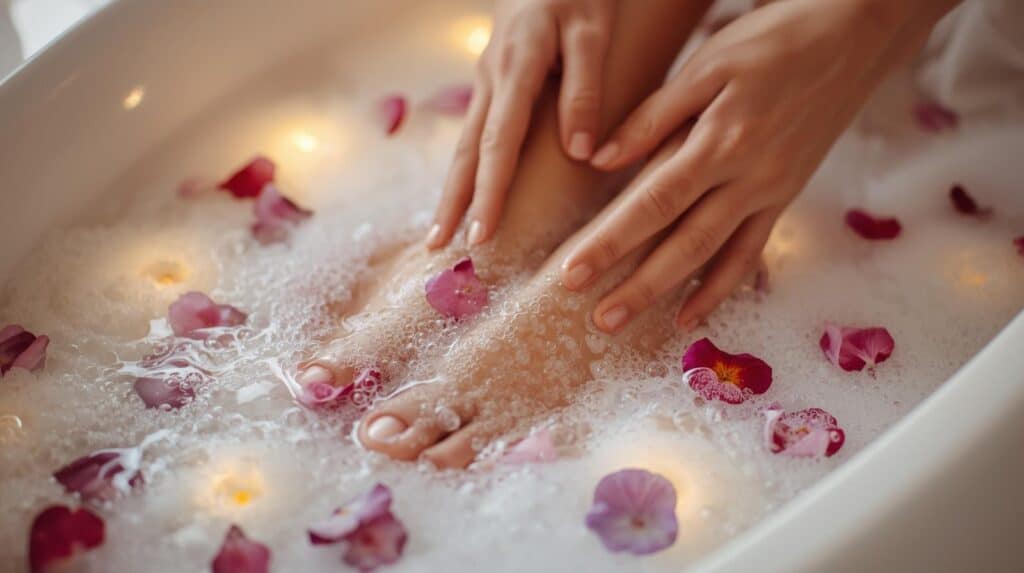
Some soak products contain Epsom salts. You may enjoy the warm-water ritual, but do not assume the added salts provide proven pain relief or deliver magnesium through the skin.
A brief soak can soften the nails and surface skin before grooming.
Longer soaking is not automatically better, especially for fragile or already irritated skin. Follow any foot-care advice from your clinician.
The technician may then move on to gentle smoothing or exfoliation, depending on the package.
Exfoliation
Many deluxe pedicures include a scrub or other exfoliating treatment for the feet and sometimes the lower legs.
The goal is to smooth rough surface skin, not remove every bit of protective thickened skin from your soles.
It should not leave your feet raw, sore, or tender to walk on.
The salon may use physical exfoliation, a chemical exfoliant, or a combination suited to your skin.
Physical exfoliation uses particles in a salt or sugar scrub, to gently smooth the surface. Product choice and pressure should suit the condition of your skin.
The particles help lift loose surface cells. More pressure is not necessarily more effective, and scrubs should be kept off cuts or inflamed patches.
Chemical exfoliants may contain ingredients such as lactic or glycolic acid. Application time and removal depend on the formula, so there is no universal “leave it on for a few minutes” rule.
Acids can sting or irritate. Tell the technician promptly if you feel burning or pain rather than assuming the sensation is part of the treatment.
These products help loosen surface cells, but they are not suitable for every foot condition. Do not use a salon peel to treat a painful corn, deep crack, or suspected infection.
Ask where the exfoliant will be applied and whether it is appropriate if your skin is sensitive or recently irritated.
Gentle handling matters more than an aggressively smooth result. Decline razor-style callus shaving and ask for a less abrasive approach.
Paraffin Wax
Some packages include a paraffin wax treatment; at others it is an optional paid upgrade.
This involves warm, melted wax that sets around the skin. Treatment formulas may contain added fragrance or colour, so they are not all plain or unscented.
The salon may use a controlled dipping system or a single-use application method. Ask how the wax and equipment are handled between clients.
Paraffin provides warming contact at the skin’s surface. It should not be described as heat penetrating all the way into your bones.
It retains warmth while the coating sets, and may be covered with a liner or wrap for the treatment period.
The warmth may feel soothing, but a salon pedicure should not promise to treat joint inflammation or a circulation problem.
Paraffin is also used in some supervised therapy settings. That does not make a cosmetic wax treatment a substitute for assessment of ongoing foot pain.
If you enjoy warmth and a richer moisturising step, it may be an appealing extra rather than an essential part of nail care.
The coating can leave the skin feeling softer temporarily. How long that lasts depends on your skin and aftercare.
Heat still needs careful control, even with wax designed for this purpose.
A low melting point does not make overheated wax harmless. The product and heater must be used as directed, and the treatment should never feel painfully hot.
Tell the salon beforehand if you have reduced sensation, poor circulation, broken skin, or a condition affecting your feet. A heated treatment may be inappropriate; get individual advice before booking.
Hot Towel Wrap
A warm towel wrap is another common spa-pedicure extra.
It may follow a scrub or mask, or be used before another step. There is no single required order.
The towels should be clean, comfortably warm, and used for your appointment only.
Some salons scent them, but you can request unscented towels. Essential oils are not necessary for the wrap to feel pleasant.
A towel may help remove product residue and provide a brief warming finish.
Tell the technician straight away if it feels too hot. Do not wait for an uncomfortable towel to cool against your skin.
You can ask to skip the wrap, have it removed earlier, or use a cooler towel.
Once it is removed, the technician continues with the remaining grooming or finishing steps.
Pedicure
The nail-care portion is usually similar to a basic pedicure: shaping the toenails, attending to the surrounding area, and applying a finish if wanted.
Discuss the length and shape before trimming. Toenails are generally trimmed straight across rather than cut deeply into the corners.
Ask for cuticles to be left intact rather than cut or forcefully pushed back. They help protect the nail area from infection.
Choose regular polish, gel if offered, or a polish-free finish. Gel application and removal may cost extra, even in a deluxe package.
Lotion Massage
A foot or lower-leg massage with moisturizing lotion may happen before polish rather than at the very end. The salon’s sequence can vary.
An extended massage may be one of the main differences from the basic service. Ask how many minutes are included instead of assuming every package offers 10–15 minutes.
Let the technician know whether you prefer light pressure or would rather skip massage entirely.
Massage may feel relaxing, but it is not a treatment for unexplained swelling, persistent pain, or poor circulation. Seek medical advice for those concerns before having the area massaged.
The lotion helps soften dry-feeling skin. Continued moisturising at home usually matters more than expecting one application to last for days.
If you prefer an at-home version, the tutorial below from Beatz by Tay offers a visual example. Keep your own routine gentle, use products as directed, and avoid cutting cuticles or shaving calluses.
How Long Does A Spa Pedicure Take?
A spa pedicure usually takes longer than an express or basic service because it includes additional treatment steps.
Compare the salon’s listed appointment times rather than assuming a standard duration from the name alone.
Allow roughly an hour for many spa packages, with longer appointments possible for extra treatments, polish removal, or detailed finishing. Confirm the actual booking length with the salon.
Ask whether the quoted time includes removing old polish and drying regular polish. Bring suitable footwear if you are leaving with freshly painted toes.
How Much Does A Spa Pedicure Cost?
Spa and deluxe pedicures usually cost more than a salon’s basic service, but there is no universal price range.
Location, appointment length, the setting, and included extras all affect the total.
Compare the itemised services rather than assuming a higher price means more nail care or better hygiene.
For a concrete US example, Eagle Day Spa’s posted menu lists a spa pedicure at $60 and a deluxe pedicure at $65. These are individual menu prices, not a national average.
Another example is Legacy Nails & Spa in Arlington, Texas, which lists an Organic Green Tea Spa Pedicure at $65 for 60 minutes. Prices and inclusions can change, so confirm directly when booking.
For the final quote, ask about gel removal, gel colour, nail art, treatment upgrades, taxes, and any service charge. These can change the total substantially.
The upgrade may be worthwhile if you want the extra massage time or a particular moisturising treatment. If your priority is simply tidy nails and colour, a basic pedicure may meet your needs.
Choose the package for the extras you will actually enjoy. There is no need to pay for wax, fragrance, or massage you would prefer to skip.
What To Check Before Your Appointment
Ask how the salon cleans and disinfects reusable tools and footbaths between clients, and whether disposable files and buffers are new for each person. A fresh basin liner alone does not answer every question about equipment hygiene.
The American Academy of Dermatology recommends avoiding shaving your lower legs for at least 24 hours before a pedicure and not cutting or forcefully pushing back cuticles. Postpone the appointment if you have open cuts or signs of infection.
If you have diabetes, poor circulation, reduced sensation, or a history of foot wounds, speak with your healthcare professional before booking. Scripps Health’s pedicure advice explains why avoiding skin injury is especially important. A cosmetic pedicure is different from care provided by a podiatrist.
Final Thoughts
A spa pedicure can be a pleasant way to combine nail grooming with a little extra time for yourself.
Its value comes from the specific service and your comfort, not the deluxe label alone.
Expect a cosmetic finish and temporarily softer-feeling skin, rather than treatment of an underlying foot problem.
Menus vary, so ask what is included before committing to a booking.
Confirm the appointment length, total cost, polish type, and any extras you want removed or substituted.
Clean equipment and gentle technique matter at every price point.
The best choice is a service that leaves your feet comfortable and gives you the experience you wanted.
Related Articles
How Long Does A Pedicure Last?
What Is A Japanese Manicure? – Plus How To Do One At Home