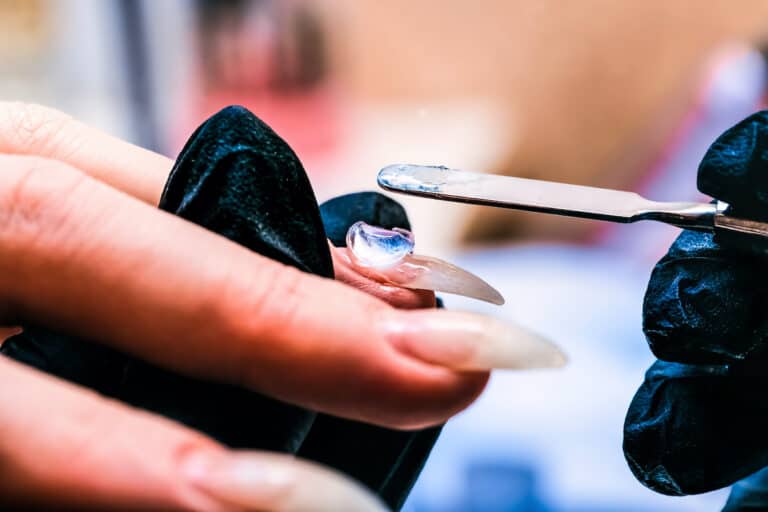

How To Use Acrylic Powder Without Acrylic Liquid
Acrylic nails take practice because the powder and liquid monomer must be used in the ratio and technique recommended for that specific system. Changing the liquid changes the chemistry, not just the consistency.
A properly mixed acrylic bead should be workable enough to shape without flooding the skin, crumbling, or setting before you can control it.
In a traditional liquid-and-powder acrylic system, both acrylic powder and a compatible acrylic liquid, or monomer, are essential to creating the enhancement.
If either component is missing, you no longer have a traditional liquid-and-powder acrylic system, even if the substitute mixture eventually feels hard.
Substituting unrelated household liquids can prevent proper polymerization and may lead to weak, grainy, tacky, lifting, or cracking material while increasing skin exposure to ingredients that have not cured as intended.
So, how can you use acrylic powder without acrylic liquid?
There is no safe household substitute that turns traditional acrylic powder into properly cured acrylic without its compatible liquid monomer. Rubbing alcohol, nail glue, water, acetone, and dip activator do not perform the same chemistry. If you do not have monomer, use a different nail system that is specifically designed to work without it.
What Is Acrylic Powder?
Acrylic powder is the powder component of acrylic nails.
The powder contains acrylic polymer particles and other ingredients designed to react with a compatible liquid monomer.
Once properly polymerized, acrylic powder and monomer form a rigid enhancement over the natural nail.
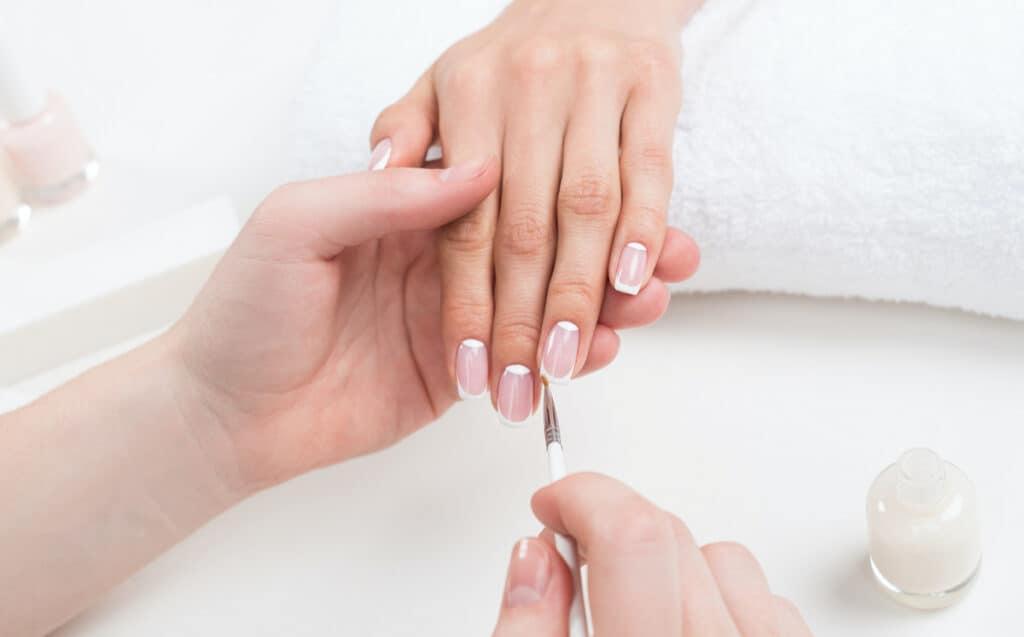
Acrylic powder can also determine the color and opacity of the finished enhancement. Powders may be clear, translucent, nude, or highly pigmented, so polish is optional when you already like the powder shade.
Traditional acrylic enhancements require both the powder and the compatible liquid monomer.
What Is Acrylic Liquid?
Liquid monomer wets the powder and starts the polymerization process that forms the acrylic bead. The manufacturer determines the compatible chemistry and working ratio for that system.
You cannot create a true liquid-and-powder acrylic enhancement without a compatible acrylic monomer.
If you do not have monomer, the safer approach is to switch to a different manicure system, such as a matched dip system or press-ons, rather than trying to improvise the chemistry.
Professional nail products may not always be easy to find locally, but difficulty finding monomer does not make an incompatible substitute chemically suitable.
Some professional brands restrict distribution, while others sell acrylic systems directly to consumers depending on the market.
Getting all the tools and compatible products together can take some planning. A kit such as this Morovan set can simplify shopping, but always check that the powder, monomer, prep products, and finishing products are intended to work together.
Acrylic liquid can be harder to source than powder in some places, but it is not a component you should improvise. A purpose-made option is available here on Amazon.
Acrylic liquid is not simply an optional bonding liquid. It is a reactive component of the system, so another liquid should not be assumed to activate the powder correctly.
Products that harden powder by a different mechanism create a different nail system, not a substitute acrylic enhancement.
Why Do You Need Them Both?
Mixing compatible acrylic liquid and powder starts the polymerization process that turns the workable bead into a rigid enhancement.
Without the correct powder-and-monomer pair, you cannot rely on the same curing behavior, adhesion, strength, or wear expected from a properly formulated acrylic system.
Do not replace the monomer with a household or unrelated nail liquid. If you are missing monomer, pause the acrylic service or choose a product system designed to work with the materials you actually have.
What To Use If You Have Acrylic Powder But No Monomer
There is no like-for-like household replacement for acrylic liquid. If you do not have the correct monomer, use a different complete manicure system instead of trying to force acrylic powder to work with an unrelated liquid.
Do not choose a liquid merely because it is sticky or adhesive. Proper acrylic depends on compatible polymerization chemistry, not just bonding power.
If you choose another system, use a complete product made for nails and follow its own instructions.
Unmatched liquids can react unpredictably, remain partly uncured, or fail to create a usable enhancement at all.
More importantly, mismatched chemistry can leave uncured material against the skin, which is something to avoid with acrylate-based nail products.
Rubbing Alcohol
Rubbing alcohol cannot replace acrylic liquid.
Rubbing alcohol is common in nail prep and salon cleaning, which is one reason it is sometimes mistaken for a possible substitute.
Alcohol has uses in nail prep and cleaning when a product specifically calls for it, but it is not an acrylic monomer.
Mixing rubbing alcohol with acrylic powder does not create properly polymerized acrylic, even for short wear.
Instead, the mixture may stay grainy, weak, or unstable because the chemistry is wrong.
Skip this workaround and use regular polish, press-ons, or another complete nail system if you need a temporary manicure.
Nail Dip Powder Activator
Dip powder systems share some visual and material similarities with acrylic, but they use a different liquid system.
Both can use acrylic-based powders to build color and structure, but the liquids that bind and harden those powders are not interchangeable.
Nail Dip Activator is another product that is sometimes confused with acrylic monomer.
It does not turn acrylic powder into traditional liquid-and-powder acrylic. Dip activator is designed to cure the resin used in a dip system.
If you have the matching dip base, activator, top coat, and a powder confirmed to be compatible, you can use a dip system instead. Follow the dip manufacturer’s instructions rather than mixing activator directly into acrylic powder.
Nail Glue
Nail glue also cannot replace acrylic monomer in a traditional acrylic bead.
Nail glue is useful for jobs such as securing nail tips when the product directions allow it.
Its usual job is attaching nail tips or repairs according to the product directions, not polymerizing acrylic powder.
Many nail glues are cyanoacrylate-based, which is a different chemistry from acrylic monomer systems.
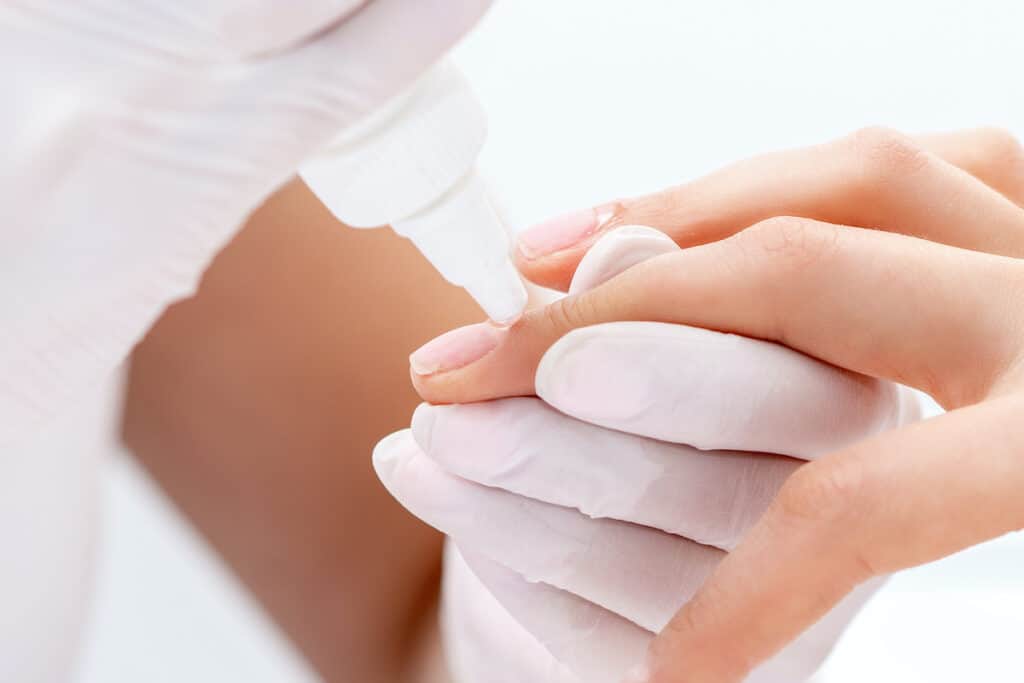
Do not mix ordinary nail glue into acrylic powder to create a sculpting bead. If you want to use powder with a resin-based system, use liquids specifically designed for dip application.
What To Avoid Using For Acrylic Liquid
Water and acetone are two other liquids people may consider because they are easy to find, but neither performs the job of acrylic monomer.
Using either one to replace acrylic liquid will not produce the controlled polymerization needed for a traditional acrylic enhancement.
Neither liquid supplies the monomer chemistry required for a traditional acrylic bead.
Water
Water may seem like the simplest replacement because it can wet the powder, but wetting and polymerizing are not the same process.
Water does not react with acrylic powder in the way acrylic monomer does, so it cannot create a usable acrylic enhancement.
Adding water can simply contaminate the product or leave you with wet, unusable powder.
Acetone
Acetone is also unsuitable because it is a solvent used in nail removal, not a liquid designed to polymerize acrylic powder.
Acetone is a solvent commonly used to remove polish and soak off compatible nail enhancements.
It is not a polymerizing liquid and should not be mixed with acrylic powder as a substitute for monomer.
Acetone can soften or dissolve many cured nail products during removal, but it does not provide the chemistry needed to build acrylic.
What To Do If You Have Acrylic Powder But No Monomer
If you have acrylic powder but no compatible monomer, the simplest answer is to pause the acrylic application rather than creating a bead with a substitute liquid.
Instead, decide whether the powder is explicitly compatible with another system, such as dip. If it is not, save the powder until you have the correct monomer.
Do not mix the powder with rubbing alcohol, acetone, water, nail glue, dip activator, or homemade solvent blends.
Those mixtures are not simply lower-quality acrylic. They are chemically different systems or failed mixtures and may not cure as intended.
Prep
Nail prep matters for adhesion in many manicure systems, especially acrylic, but prep cannot replace a missing reactive component.
Good prep cannot compensate for missing or incompatible chemistry.
Nail prep should be gentle and intended to improve adhesion without over-filing or damaging the natural nail.
Clean, dry nail plates can support adhesion when you eventually use the correct nail system.
Prime
Depending on the acrylic system, primer or dehydrator may be part of the recommended prep routine.
Prep products can help remove surface oil and moisture or improve adhesion, but their purpose varies by formula and system.
Everyday prep items include primer, dehydrator, and base coat.
Primer, dehydrator, and base coat are not interchangeable. Use only the prep steps specified for the system you are applying, since some products promote adhesion while others serve a completely different role.
Use only the prep products recommended by the nail system you are actually applying. Extra primer or dehydrator cannot make an incompatible powder-and-liquid combination safe.
Apply
If you have obtained the correct monomer, follow that acrylic system’s recommended liquid-to-powder ratio and application instructions.
Use a compatible acrylic monomer with your acrylic powder, ideally within the same manufacturer’s system.
The bead should behave as the manufacturer demonstrates: controllable, not flooding the skin, and not crumbling or setting instantly.
If the bead consistently behaves incorrectly, do not keep changing ratios blindly. Check product compatibility, room conditions, and the system instructions.
Once the bead is on the nail, guide and shape it before it sets while keeping uncured product off the cuticle and surrounding skin.
Shape
Once the acrylic has fully hardened, you can refine the surface and shape with careful filing.
If a correctly applied acrylic surface needs refinement after curing, use a file and buffer carefully.
A nail file and buffer can help smooth the surface and add shape.
Work slowly and in small sections to ensure you don’t over-file your nails.
A properly matched acrylic system should cure into a durable enhancement. Lifting, unusual softness, persistent tackiness, or cracking can indicate application or compatibility problems.
Finish
Once you’ve created uniform nails, it’s time to finish the rest of your manicure.
This is when you may decide to add a few coats of polish or apply nail art.
However, you may skip this step if you’ve chosen a colored acrylic powder.
Finish with the top coat recommended for your system if required, then follow its drying or curing directions before exposing the manicure to normal wear.
The video below demonstrates a no-monomer workaround, but it should not be treated as equivalent to properly polymerized acrylic or as a replacement for a manufacturer-approved nail system.
How Effective Are Acrylic Liquid Alternatives?
Household liquids and unrelated nail products are not reliable substitutes for acrylic monomer.
They should not be used to replace acrylic liquid or monomer at all in a traditional acrylic system.
If you need a temporary manicure for a special event, regular polish or properly applied press-ons are more predictable options.
Rubbing alcohol, nail glue, and dip activator do not provide the same polymerization chemistry as acrylic monomer.
Using them with loose acrylic powder can leave you with a different, poorly controlled material or an incompletely cured mixture rather than true liquid-and-powder acrylic.
If you are unsure which products are compatible, ask the manufacturer or a trained nail professional rather than experimenting on the natural nail.
Do not make your own acrylic monomer at home. Monomer chemistry, stabilizers, catalysts, and impurity controls matter for safe performance. The embedded video below is preserved for context, but homemade monomer is not a recommended workaround.
Takeaway
Acrylic monomer is a purpose-made reactive liquid designed to polymerize with compatible acrylic powder.
If you cannot access the correct monomer, postpone the acrylic application or choose a different complete nail system rather than improvising the chemistry.
Nail glue, rubbing alcohol, and dip activator are not substitutes for acrylic monomer.
Use each of those products only for the purpose described by its own manufacturer.
Likewise, water and acetone do not create acrylic when mixed with acrylic powder. For a proper acrylic enhancement, use a compatible powder-and-monomer system and keep uncured product off the skin.
Related Articles
How To Clean Underneath Acrylic Nails
How To Shorten Acrylic Nails At Home
Best Glow-In-The-Dark Acrylic Powders