
Can You Use Eyelash Glue For Fake Nails?
Fake nails can give you a polished look without a salon appointment, especially when you use a press-on kit with the right adhesive.
But what happens when you have picked out your nails and discover that the glue is missing or has dried up?
Reaching for the lash glue in your makeup bag might seem like a handy shortcut.
The problem is that an adhesive designed for a lightweight lash band has a very different job from one holding a rigid press-on nail in place through handwashing, movement, and everyday wear.
You do not need professional-only products for an ordinary press-on set. You do need an adhesive intended for the nails you are using.
Nail glue and nail adhesive tabs are the usual options for press-ons, depending on the kit, how long you want the set to last, and how easily you want to remove it.
Salon acrylic enhancements, full-cover press-ons, and gel extensions are different systems. They do not all attach with the same product.
Wear time varies by kit, preparation, nail fit, nail length, and daily activities. No adhesive can promise a damage-free manicure that lasts for weeks on everyone.
So, before borrowing an adhesive from another part of your beauty routine, check its intended use.
That is especially important with “eyelash glue”, a name used for several very different products.
Can you use eyelash glue for fake nails?
Strip-lash glue may make a fake nail stick briefly, but it is not a reliable substitute for nail glue and is not designed for that use. Choose nail adhesive tabs for temporary press-ons or the nail glue recommended by your kit. Do not substitute professional lash-extension adhesive, and never use nail glue on lashes.
Here’s why lash and nail adhesives behave differently, what to use when you run out of nail glue, and what to do if you have already tried lash adhesive on your press-ons.
What Is Nail Glue?
Nail glue is an adhesive designed specifically with nails in mind.
Many conventional nail glues use cyanoacrylate, a fast-setting adhesive. Sharing an ingredient with another glue does not make the finished products interchangeable.
Nail glue is intended for nails, but it can still bond skin accidentally, irritate the surrounding area, or damage the natural nail when removed roughly. Careful application and removal matter.
Do not choose glue for claims about nourishing nails or making them grow. Its main job is attachment, not nail treatment.
It can attach press-on nails or tips when the product directions specify that use. Sculpted acrylic itself is formed from a separate liquid-and-powder system.
Follow the wear guidance for your particular set rather than assuming every artificial nail should remain on for two or three weeks. Press-ons, glued tips, acrylics, and gel extensions all have different maintenance expectations.
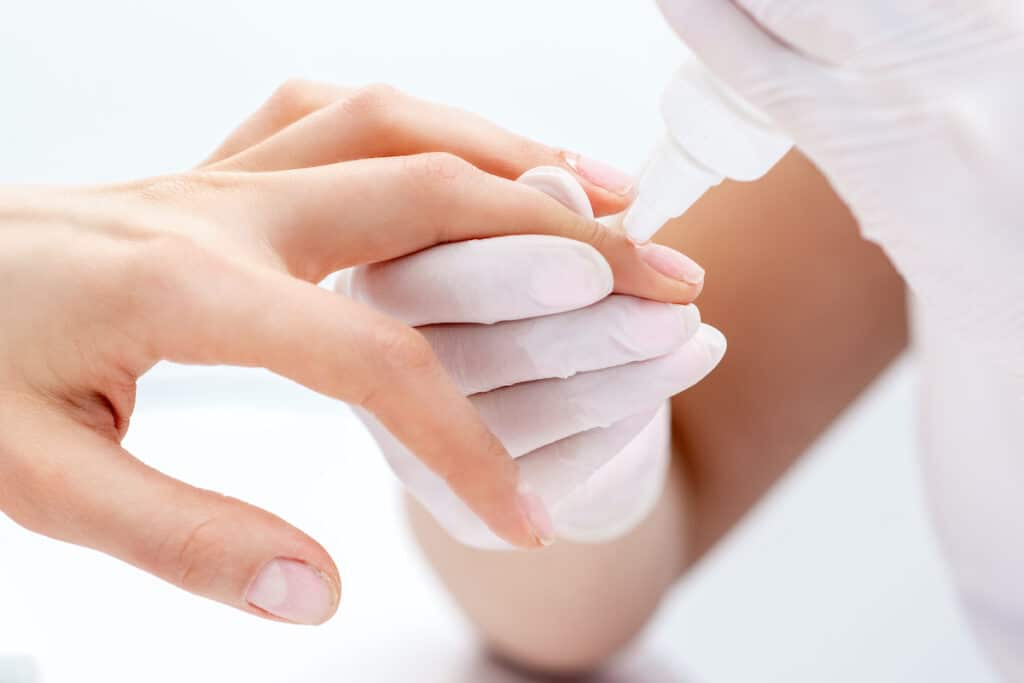
If you are applying fake nails at home, check the contents of the kit before starting. Some include glue, some include tabs, and some have adhesive already attached.
A consumer press-on kit does not automatically need salon-only products. Matching the nail to the adhesive system is more useful than choosing the strongest-sounding bottle.
The right adhesive helps the nail stay attached, but it does not guarantee a healthy nail underneath. Avoid covering painful, damaged, or discoloured nails.
How Does Nail Glue Work?
The purpose of nail glue is to bond an artificial nail or tip to the natural nail.
Application varies: some kits instruct you to apply glue to both surfaces, while others have different directions. Use the amount and placement specified on your pack.
Ordinary cyanoacrylate nail glue does not need a UV or LED lamp. It sets through a reaction with small amounts of moisture.
Products sold as “gel nail glue” need closer attention, because the name is used for different formulas.
A thick cyanoacrylate glue can be called a gel and still set without a lamp. A light-cured gel adhesive is a different system and needs the specified compatible lamp.
Do not assume a gel adhesive can cure properly beneath any opaque press-on. Use only the tips, lamp, and method approved for that gel system.
Once applied, follow the kit’s instructions for setting, water exposure, wear, and removal. A lamp cannot turn ordinary lash glue into a nail adhesive.
What Is Eyelash Glue?
Eyelash glue is another popular beauty adhesive.
Strip-lash adhesive is designed to hold a lash band in place near the lash line when used as directed. It should not go into the eye.
The bottle you already own may be convenient, but convenience does not establish that it is suitable for nails.
Lash adhesive and nail adhesive should not be treated as interchangeable.
Temporary strip-lash glues generally form a flexible bond suited to a lightweight lash band, which is very different from the rigid bond a press-on nail needs.
Professional lash-extension adhesives are different. Many use cyanoacrylate and are intended for trained application to natural lashes, not as a DIY substitute for nail glue.
There are also cluster-lash bonds and other specialised products. Read the label rather than grouping every lash adhesive together.
Even an adhesive intended for lash use can cause irritation or an allergic reaction. “For lashes” does not mean harmless, and no lash adhesive should be allowed to enter the eye.
Check ingredients and warnings, especially if you have reacted to adhesives or latex before. Formulas differ, including within one brand.
How Does Eyelash Glue Work?
For a conventional strip-lash glue, follow the directions for applying it to the lash band before positioning the lash. Do not apply it into the eye or on the waterline.
Many strip adhesives need a short wait before placement so they become tacky rather than wet.
A wet adhesive can allow the band to slide, but the correct wait depends on the formula.
There is no universal 30- or 40-second rule for every lash product. Use the timing on the label.
That tacky stage helps with lash placement. It is not evidence that the same product will support a rigid artificial nail.
Use the lash adhesive’s specified remover and method. Oil-based remover works for some temporary formulas, but not every lash adhesive should be removed the same way.
Can You Use Eyelash Glue For Artificial Nails?
Can lash glue make a fake nail stick at all? A temporary strip adhesive may create a weak initial hold, which is why the hack appears online. That does not make it a dependable or appropriate nail adhesive.
But an initial hold is different from reliable wear. Strip-lash glue is not designed to keep a press-on attached to the nail plate through water exposure, leverage, and normal hand movement.
A nail that loosens while you dress, wash your hands, or handle everyday objects can be more trouble than skipping the set.
Strip-lash adhesive generally stays more flexible than conventional nail glue. A nail may move, lift at the edges, or detach unexpectedly.
Extra filing, more glue, or a longer drying time will not change the product’s intended use.
Nor should you switch to a stronger lash-extension adhesive. Its professional lash purpose does not make it an appropriate nail product.
For a one-night event or short wear, use nail tabs that are compatible with your press-ons. If you do not have a suitable nail adhesive, saving the set for another time is safer than improvising with lash glue.
Avoid Using Nail Glue On Your Lashes
Never use nail glue to attach false lashes. It is not formulated for the eye area and can bond skin, lashes, or eyelids together almost instantly.
It can bond eyelids or lashes together and injure the eye. This is more serious than an uncomfortable makeup application.
Keep nail glue away from eye products so similar-looking bottles cannot be mixed up.
If glue enters the eye, rinse immediately with plenty of water and seek poison-control or urgent medical advice. Do not force stuck eyelids apart or use acetone near the eye.
Poison Control recommends immediate irrigation for adhesive eye exposure. Eye pain or vision changes need prompt medical attention.
Eyelash Glue Vs. Nail Glue
The most useful comparison is temporary strip-lash adhesive versus conventional nail glue, while professional lash-extension adhesive should be treated as a separate product altogether.
Each product is made for a specific attachment, surface, and removal method.
Some adhesive categories share ingredients, but their formulations and instructions can still be different.
Neither is automatically free from irritation or allergy. The correct product for the job is the starting point, not a promise of zero risk.
Press-ons have to cope with handwashing, movement, tapping, and leverage from their length, especially when the tips extend well past the natural nail.
A lightweight lash band places different demands on an adhesive. That difference is why a flexible lash bond is not a dependable nail repair.
| Adhesive | Intended use | Suitable substitute for nail glue? |
|---|---|---|
| Temporary strip-lash glue | Attaching lash bands as directed | No reliable nail hold |
| Professional lash-extension adhesive | Trained application of lash extensions | No |
| Conventional nail glue | Compatible press-ons or nail tips | Use as directed; ordinarily no lamp needed |
| Nail adhesive tabs | Compatible temporary press-ons | Yes, when approved for the nail set |
| Light-cured gel adhesive | Compatible gel extension system | Not a direct swap; requires the correct tips and lamp |
Longevity
Nail-glue wear claims vary by product and set. A salon acrylic maintenance schedule is not a wear-time guarantee for glued-on press-ons.
Fit, preparation, nail length, water exposure, and daily activities all affect how well a set stays attached.
Follow the maximum wear period on the kit and remove a nail if it begins lifting, rather than repeatedly sealing the gap.
Temporary strip-lash adhesive is generally designed for short wear and flexible attachment.
Follow its removal schedule. Do not assume rules for temporary strip lashes also apply to professional extensions or every cluster-lash system.
There is no dependable wear time for lash glue used on nails, including a promise that it will last one evening.
Formulation
Conventional nail glue often contains cyanoacrylate. Temporary strip glues may use latex or other polymers, depending on the formula.
For example, Ardell sells both latex-containing and latex-free strip adhesives. Check the exact product rather than assuming all lash glues have the same ingredients.
Professional lash-extension glues may also contain cyanoacrylate, but that shared chemistry is not a reason to swap them with nail glue.
An adhesive can irritate skin around the nails even if you have used it elsewhere without problems.
A product intended for nails should never be applied to the lash line.
Added vitamins do not establish that glue supports nail growth or prevents nail damage. Application and removal still need care.
Application Methods
Different nail kits may specify different preparation, adhesive amounts, pressure, and hold times, so there is no single application method that suits every system.
Follow the manufacturer’s directions for the exact kit. Do not combine steps from unrelated lash, acrylic, and gel tutorials.
A UV or LED lamp is only relevant to a compatible light-cured gel system. Ordinary nail glue and strip-lash adhesive should not be put under a lamp to try to strengthen them.
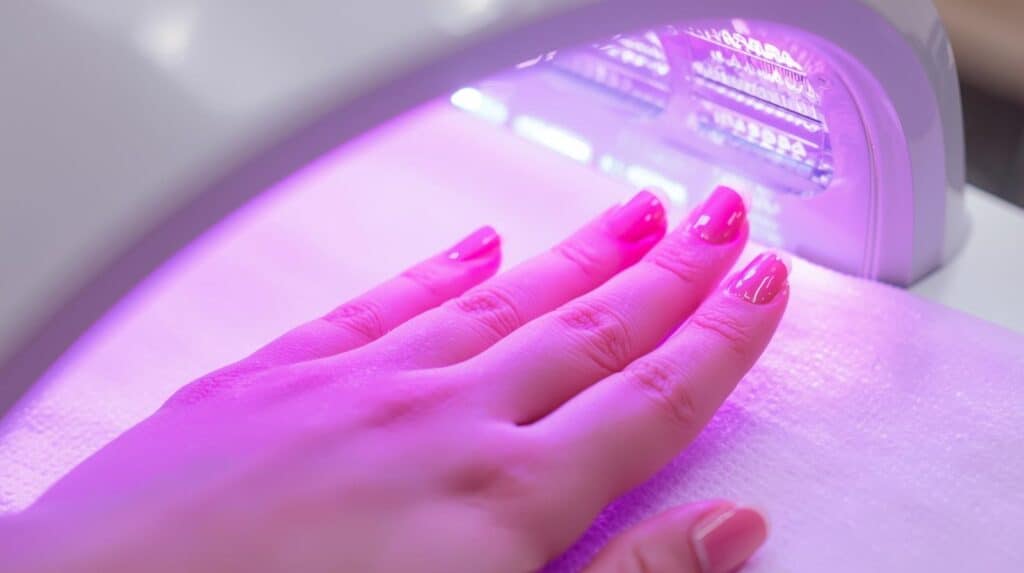
For strip lashes, follow the adhesive’s own application and removal directions.
For press-ons, use the glue or tabs the nail manufacturer recommends.
For gel extensions, use a complete compatible system and avoid uncured gel touching the skin. If you are unsure about curing, have a trained nail technician apply them.
Accessibility
You do not have to buy professional-only glue for a basic press-on manicure.
Consumer nail glues and adhesive tabs are sold with many home nail systems. Choose according to compatibility and directions rather than assuming salon products are always better.
Some professional systems require specialist training or products. That does not make lash glue a substitute when those products are unavailable.
A lash adhesive in your makeup bag belongs with the lash type it is labelled for.
A professional extension adhesive should stay with a trained lash professional, even if a listing describes it as extra strong.
What To Use Instead Of Eyelash Glue For Nails
If you are out of nail glue, choose a nail-specific alternative. Adhesive tabs can work well for temporary press-on wear when the nail set is compatible and you want easier removal.
Tabs are small adhesive pieces rather than liquid glue. They can be convenient for short-term wear, events, photos, or anyone who wants a more easily removable press-on manicure.
They still need the right fit and careful application. Shorter nails put less leverage on the attachment than long ones.
Some press-ons arrive with adhesive already attached. Check the pack before adding any extra product.
Avoid household superglue, craft glue, or DIY mixtures of nail polish and glue. Products not intended for cosmetic nail use may create a stronger or more irritating bond than you can safely manage at home.
The tips below apply to press-ons used with their recommended nail glue or tabs, not to extending the wear of lash adhesive.
Cleanse Your Nail Plate
Start with clean hands and check your nails before applying anything.
If a nail is sore, lifting from the nail bed, or unusually discoloured, do not cover it with a press-on.
Follow the kit’s preparation instructions. If it supplies a prep pad or specifies a cleanser, use that rather than layering several harsh products.
Clean the surface and let it dry fully before application.
Avoid leaving lotion or oil on the bonding surface immediately before attaching the nail.
A wet or oily surface can interfere with adhesion, but you do not need to aggressively dehydrate, scrape, or over-file your natural nails to make the set stick.
Do not thin the natural nail with repeated filing just to make an adhesive grip.
Good preparation helps the correct nail adhesive. It does not make lash glue a suitable replacement.
Shape Your Nails
Lay out the press-ons and match a size to each finger before opening the glue.
Gently smooth a rough free edge if needed. Do not cut the cuticles or force them back to create more space.
Test the fit of each artificial nail against your natural nail without adhesive.
It should fit comfortably without pressing painfully into the sidewalls or sitting on the surrounding skin.
A tip that is too narrow, too wide, or a poor match for your nail’s curve may lift, pinch the sidewalls, or leave gaps that tempt you to use too much glue.
Use a different size or shape instead of trying to fill a poor fit with extra glue.
Choosing a shorter length can make a temporary manicure easier to manage.
Do not add a base coat or primer unless the nail system calls for it. Extra layers can interfere with the intended bond.
Apply Thin Layers
With nail glue, use the amount specified by the manufacturer. More glue is not necessarily better and can spill onto the surrounding skin or make removal harder.
Some kits call for adhesive on both surfaces; others do not. Follow your pack rather than a general rule.
With tabs, choose the specified size and placement, then follow the instructions for removing the protective film.
Keep liquid adhesive away from the cuticles and surrounding skin.
Too much glue can spill or bond skin accidentally. Do not try to compensate for gaps by flooding the nail.
Keep wet cyanoacrylate glue away from cotton and wool. It can release enough heat on contact to cause burns, so do not wipe a fresh spill with a cotton pad.
Follow The Adhesive’s Setting Instructions
A tacky wait is a step used with some strip-lash adhesives, not a universal nail-glue instruction.
Waiting longer does not turn a strip adhesive into a product designed for press-ons.
For ordinary nail glue, follow the kit’s timing so you position the nail before it sets.
For tabs, follow the pressure and placement directions instead of waiting for a liquid to dry.
There is no reason to add a lash-glue step to either method.
Hold The Nail In Place As Directed
The correct adhesive still needs the application method on its label.
Align the press-on carefully and use the pressure recommended by the kit.
Hold it for the instructed time; there is no universal one-minute rule for every nail product.
Avoid squeezing so hard that liquid glue is pushed onto the surrounding skin.
If the nail slides, rocks, or keeps lifting, stop and check the fit, prep, and directions instead of adding layers of different adhesives.
Why Top Coat Won’t Fix A Weak Bond
A top coat cannot fix a weak bond underneath a press-on.
Do not paint top coat into a lifted gap or onto skin to try to seal the nail in place.
If you already used temporary strip-lash glue, remove the nail gently using the adhesive’s recommended method. Do not pull it off just because the bond seems weak.
Warm soapy water may help loosen some temporary residues, but removal varies. Use only a suitable remover as directed, and do not assume acetone is appropriate for every adhesive or reusable nail.
When Should You Use Eyelash Glue For Fake Nails?
Lash glue is not recommended as a substitute for nail glue, even for a special event or a few hours of wear.
If you need a short-term option, a compatible nail tab or pre-glued press-on is a more appropriate choice.
If a nail comes off, check both the natural nail and the artificial nail before considering reapplication.
Do not glue over moisture, irritation, damage, or discolouration. Remove a lifting nail according to its instructions rather than repeatedly patching it.
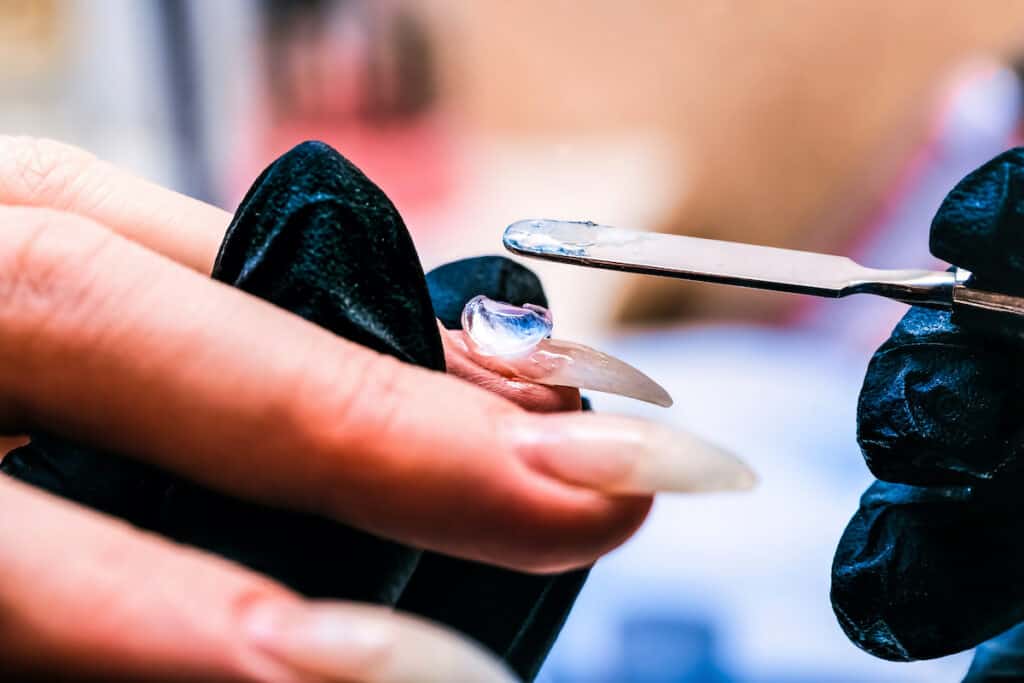
For a lifted salon acrylic or gel enhancement, ask the nail technician about a repair. Lash glue does not restore that system.
Final Thoughts
Strip-lash adhesive may make a fake nail stick briefly, but it is not a dependable nail adhesive.
Keep nail glue away from your eyes, and do not substitute professional lash-extension glue for a nail product.
For press-ons, choose a compatible nail glue or adhesive tab, size each nail correctly, and follow the preparation, setting, wear, and removal instructions for that specific kit.
If adhesive causes itching, swelling, blistering, significant redness, or persistent soreness, stop using it and seek medical advice. Do not cover the reaction with another set of artificial nails.
The video below provides a visual reference for a glue-on nail application. Use it alongside your own nail kit’s directions, not as support for replacing nail glue with lash adhesive.
Up Next: How To Get Eyelash Glue Off Clothes
Related Articles
How To Get Eyelash Glue Off Clothes
Can You Use Acrylic Powder As Dip Powder?