
How To Make Curly Hair Grow Down Instead Of Out
Curly hair can feel as if it has a mind of its own. It’s quick to generalise curly hair and lump all types of curls into one category.
However, all curly strands can look, feel, or act differently due to curl pattern, texture, density, or even porosity levels.
Curly hair can be challenging to care for at first because most people would treat curly hair like straight hair.
However, curly and coily hair often benefits from different detangling, moisture, drying, and styling techniques than straighter hair.
A common feature of many curly and coily hair types is shrinkage, which can make the hair look shorter and more outwardly voluminous than its stretched length.
Curls and coils can create natural volume, but you may sometimes want to stretch or elongate them for a different look.
How can you make curly hair grow down instead of out?
You cannot change the direction your hair biologically grows from the follicle, but you can stretch curls so they hang lower and look more elongated using heatless styles or controlled blow-drying.
It’s crucial to note that results can vary by your hair type.
Someone with tighter coils can still achieve an elongated look, although the result, shrinkage, and amount of stretch will vary from person to person.
Regardless, it’s great to enjoy the process and handle curls with care.
What Causes Curls To Grow Out?
Before choosing a stretching method, it helps to understand why your hair naturally appears to grow outward or shrink upward.
Hair can appear to grow out instead of down because of curl pattern, density, strand stiffness, shrinkage, haircut shape, and length.
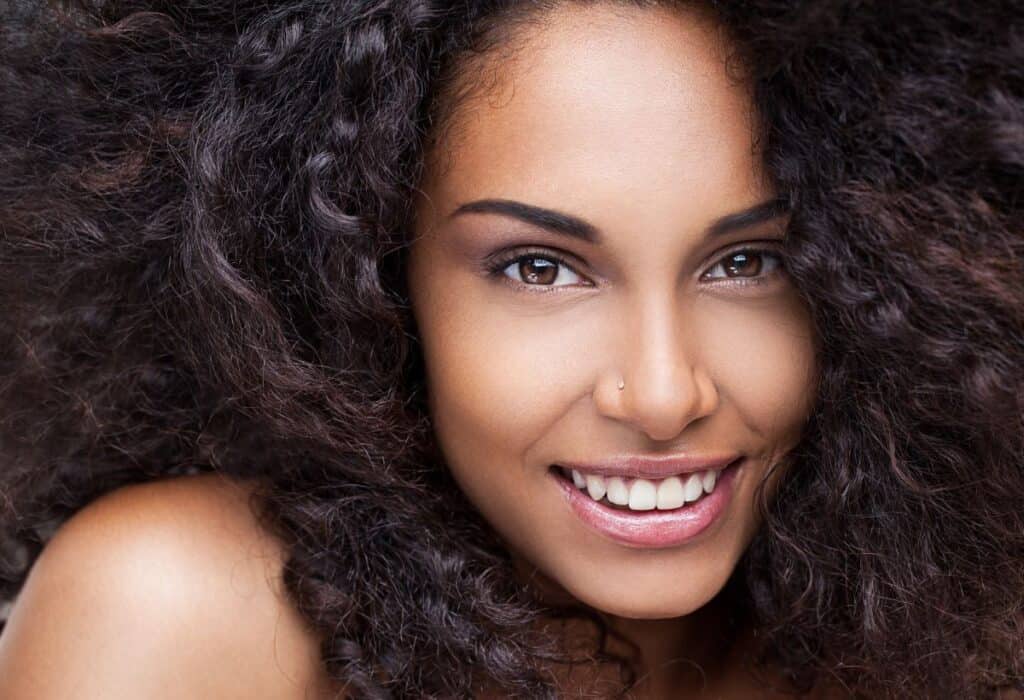
Your curl pattern affects how tightly the strand bends and how much visible length you lose to shrinkage.
These factors help explain why some curls project outward before gaining enough length or weight to hang lower, as well as why they shrink.
Curl Pattern
Curl-pattern labels can be useful shorthand, but they do not fully describe density, strand width, porosity, or styling needs.
One popular curl-typing system describes type 3 curls and type 4 coils with A, B, and C subcategories, but these categories are informal rather than medical or scientific standards.
Follicle shape and genetics influence curl formation, but the way hair hangs also depends on strand length, density, stiffness, moisture, and styling.
Shrinkage
Another factor that can contribute to unique hair growth patterns is shrinkage.
Shrinkage is a common term in the curly hair community and refers to hair that appears shorter than it actually is.
For example, tightly coiled hair can look much shorter than its full stretched length. When you stretch the curls, the strands hang lower temporarily without changing the way they grow from the follicle.
How To Elongate Curls
Now that we’ve become acquainted with curl patterns, how can you create elongated curls?
Elongated curls are curls that have been stretched so more of the hair’s actual length is visible and the overall shape hangs lower.
There are multiple ways to achieve a more elongated look without changing your natural growth direction.
A suitable haircut, conditioning products, and stretching techniques can help curls look longer, smoother, or less compact.
Get A High-Quality Cut
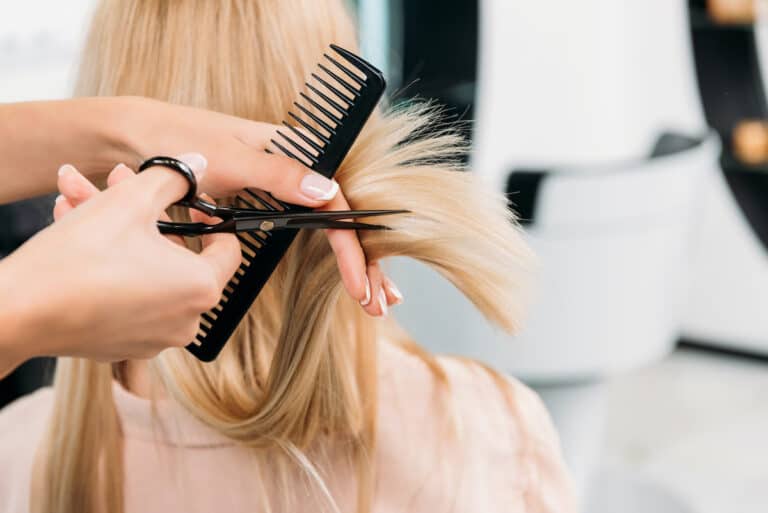
A well-planned haircut can make styling easier by balancing shape, volume, and weight.
A haircut can change how the overall silhouette sits by adjusting length, layers, and weight distribution, even though it does not change follicle growth direction.
However, cutting curly or coily hair can be challenging.
A good tip is to visit a curl specialist for a high-quality cut.
You may prefer layers for movement or, if elongation is the priority, slightly more length and weight. The best shape depends on your density and curl pattern.
Use Moisturising Products
Another way to make curls hang more smoothly is to use conditioning and leave-in products that improve slip and reduce dryness.
Deep-conditioning masks and leave-in treatments can reduce roughness and improve flexibility, which may make stretching and styling easier.
Richer leave-ins can also add temporary weight, making some curl patterns hang lower, although too much product can leave fine or low-density hair limp or greasy.
Invest In The Right Styling Tools
Styling tools can also help stretch curls, but you do not need an elaborate collection. Choose tools based on the technique you actually use.
This includes investing in diffusers, wraps, silk hair ties, and other curl-friendly products.
How To Elongate Curls With Heat
You can stretch curls with or without heat to make them hang lower temporarily.
So, what are some heat-based methods you can incorporate into your hair regimen?
You may need a combination of hair styling products and hot tools to achieve the desired result.
Heat can stretch curls quickly, but the result is temporary and repeated high heat can weaken the hair fiber over time.
In addition, you can experiment with styling products to achieve different looks.
To reduce damage, use the lowest effective heat setting, keep hot air or tools moving, and apply a heat-protectant product according to its directions.
Control Your Temperature
Using heat too often or at very high temperatures can damage the hair fiber, increase breakage, and make curls less springy over time.
There is no universal safe frequency, so adjust heat use based on your hair’s condition, previous chemical processing, tool temperature, and how much breakage you notice.
Using warm or cool air while gently tensioning the hair can stretch curls so they hang lower without using the hottest setting.
Do not treat once a week as a universal safe schedule. Some hair tolerates occasional heat well, while bleached, damaged, or very fragile curls may need much less.
Use A Heat Protectant
Another helpful tip is to invest in a multipurpose or high-quality heat protectant.
A heat protectant can reduce some thermal damage, but it does not make hot-tool use risk-free.
Heat protectants typically reduce friction and heat transfer by coating the hair surface, but their performance varies by formula and styling temperature.
Some heat protectants also include conditioning ingredients, but not every formula is designed to add significant moisture.
A richer formula may add some weight and reduce frizz, while lighter formulas may suit fine curls better.
Get A Diffuser
A diffuser can be useful if you want to dry curls with less concentrated airflow.
A diffuser spreads airflow across a wider area, which can help reduce disruption of curl clumps compared with a narrow high-speed nozzle.
How much a diffuser stretches versus enhances shrinkage depends on drying technique, airflow direction, tension, and whether you cup the curls upward or stretch them downward.
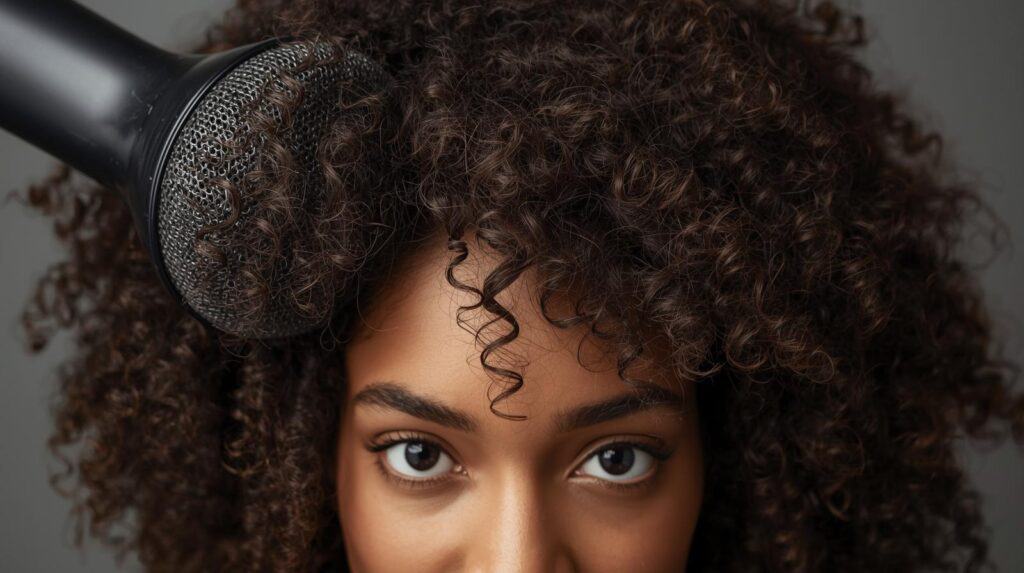
Diffusers can preserve curl definition, but they do not automatically elongate curls. For more stretch, use low or medium airflow while directing the roots and lengths downward rather than scrunching upward.
This can create a more elongated silhouette without changing the natural growth pattern.
Blow Dry Downwards
Another option is to blow-dry the hair downward with gentle tension.
Direct the airflow from roots toward ends while stretching sections gently with your hands or a suitable brush to reduce shrinkage.
This technique can be simpler than using multiple heatless sets, but take your time with dense or tightly coiled hair to avoid excessive pulling.
Using cool or lower-temperature air reduces thermal exposure, although mechanical tension can still cause breakage if you pull too hard.
How To Elongate Curls Without Heat
What if you don’t want to use heat at all on your curls?
Heatless methods such as braiding, banding, and twisting can stretch curls and reduce visible shrinkage.
The Amateur Guru on YouTube shows four easy ways to achieve elongated curls for natural, curly hair types.
Braiding
The first no-heat technique you can try to elongate your curls is braiding. Braiding doesn’t have to be complicated.
You can split the hair into a few sections, braid each one loosely, and leave the braids in until the hair is fully dry or set.
Looser braids create less of a crimped braid pattern, while tighter braids stretch more but leave a more obvious wave pattern when released.
Loose braids can reduce shrinkage while leaving more of the original curl character visible after take-down.
Banding
Another no-heat technique is banding. Banding involves using stretchy bands or multiple curl-friendly hair ties to elongate curls.
Section the hair and place soft bands progressively down each section, leaving enough space to avoid excessive pressure on the hair shaft.
Banding can keep sections organized while they stretch. Avoid bands that are too tight, and remove them if they cause scalp tension or visible creasing.
Twisting
Twisting will provide a similar result to braiding.
You can section the hair and twist each section to stretch the strands while setting a more elongated twist-out pattern.
You can customise the technique and create as many or as few sections as you want with your hair.
However, it’s crucial to note that most techniques will look different depending on what curl type you have between type 3 and type 4 hair.
Use Cool Air
Cool air is not heat styling in the usual sense, but airflow plus tension can still stretch curls and alter the temporary shape.
Many blow dryers include a cool-shot or low-temperature setting, which can help you stretch or set hair with less thermal exposure.
Cool air can be useful when you want some stretch without relying on high temperatures.
Cool air usually takes longer to dry and stretch the hair than warm air, especially on dense or low-porosity hair.
Protective Styles
Finally, you can experiment with various protective styles to help create the illusion that your hair grows downwards instead of out.
The great thing about hairstyling is that you can adapt techniques to fit your hair’s needs.
Takeaway
You cannot change the direction your curly hair grows from the follicle, but you can make it hang lower and look more elongated in several ways.
For example, conditioning products, a curl-friendly haircut, and stretching techniques can create a more elongated shape.
You can elongate curls using heat or try heatless styles.
Cool air, downward blow-drying, braiding, banding, and twisting are all options for reducing visible shrinkage and making curls hang lower.
How To Stretch Curls With Less Breakage
- Start with detangled hair: Work in sections and add enough conditioner or leave-in slip so you do not have to pull through knots while stretching.
- Avoid excessive tension: Tight bands, braids, ponytails, or repeated pulling at the roots can cause breakage and scalp soreness even when no heat is used.
- Use the lowest effective heat: If you blow-dry, start with cool or warm air and increase only if necessary. Keep the dryer moving rather than concentrating high heat on one spot.
- Expect temporary results: Humidity, washing, sweating, or re-wetting the hair can bring back shrinkage because the natural curl pattern has not changed.
- Protect fragile ends: The oldest part of the hair is usually the most weathered, so avoid aggressive brushing or tight elastics at the ends.
Curly Hair Elongation FAQs
Can You Make Curly Hair Grow Down Instead Of Out?
You can change how the hair hangs, but not the direction it grows from the follicle. More length, extra weight, stretching methods, and certain haircuts can make curls look more downward-growing.
Does Moisturizer Make Curls Longer?
Conditioning products do not increase actual hair length, but softer, more flexible strands may stretch more easily and show more of their full length.
Is A Diffuser Good For Stretching Curls?
It can be, depending on technique. Scrunching curls upward into a diffuser often enhances shrinkage and definition, while directing low airflow downward with gentle tension can create more stretch.
How Often Can You Heat-Stretch Curly Hair?
There is no universal safe schedule. Use as little heat as you need, keep the temperature moderate, and reduce frequency if you notice increasing dryness, split ends, breakage, or loss of curl spring.
Related Articles
Curly Hair Shapes – And Styles To Try