
How To Lighten Stretch Marks On Calves
Stretch marks are a normal skin change that can appear when the skin stretches or shrinks quickly.
They can develop during puberty, pregnancy, rapid weight change, muscle growth, or other periods when the body changes faster than the skin can comfortably adapt.
Stretch marks are increasingly treated as a normal part of skin texture rather than something that automatically needs to be hidden or corrected.
Stretch marks are very common and are medically known as striae.
They have also become more visible in beauty and fashion imagery, which better reflects how common they are in real life.
In most cases, stretch marks are harmless and fade gradually over time, although they may never disappear completely.
Whether you want to leave stretch marks alone or make them less noticeable is a personal cosmetic choice.
Some people are comfortable leaving them visible, while others prefer to reduce their appearance. Both choices are reasonable.
If you want to reduce the appearance of stretch marks, it helps to set realistic expectations: moisturizers can improve dryness and texture, while treatments such as prescription tretinoin, microneedling, or certain lasers may make some stretch marks less noticeable.
Stretch marks can appear on many areas of the body, including the thighs, hips, buttocks, abdomen, breasts, upper arms, and legs. Calf stretch marks are treated using the same general principles as stretch marks elsewhere.
How can you lighten stretch marks on calves?
You cannot completely erase stretch marks at home, but they often fade naturally. Keeping calf skin moisturized can improve comfort and texture, while newer stretch marks may respond to treatments such as prescription tretinoin. For more noticeable improvement, a dermatologist may recommend microneedling or a laser chosen for your skin tone and the age of the stretch marks.
What Are Stretch Marks?
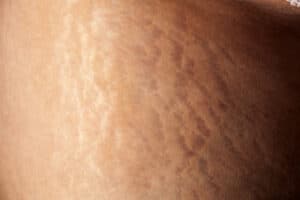
Stretch marks are a type of scar that can form when skin stretches or shrinks quickly, disrupting collagen and elastin in the dermis as the skin adapts.
Common areas include the abdomen, breasts, hips, buttocks, thighs, upper arms, and legs. Calves can develop stretch marks too, especially during rapid growth or changes in body size.
Stretch marks look different for everyone.
Depending on your skin tone and how old the marks are, they may look pink, red, purple, reddish-brown, dark brown, blue-toned, silver, or pale white.
They usually add some texture to your skin and can feel like minor scars.
Most stretch marks are harmless. Newer marks tend to be more colorful, while older marks usually become paler and slightly indented.
This includes the calves, knees, and thighs.
According to Medical News Today, “Stretch marks appear as long, thin scars on the skin, and they often change in color and prominence over time.
Stretch marks form at a 90-degree angle to the direction in which the skin stretches.”
What Causes Stretch Marks?
Our bodies undergo many changes over a lifetime, and several of those changes can contribute to stretch marks.
Rapid changes in body size or muscle mass can contribute, but stretch marks are also influenced by genetics and hormones.
Common triggers include puberty, pregnancy, rapid weight gain or loss, and muscle growth. Less commonly, certain medications or medical conditions can also contribute.
Puberty is when we experience a growth spurt, and sometimes the skin will stretch to keep up with our growing body, causing stretch marks.
If you love building muscle or lifting weights, it can also alter your skin’s appearance and cause stretch marks.
Pregnancy, weight loss, and weight gain can cause stretch marks because the body undergoes rapid changes.
Less commonly, widespread or unusual stretch marks can be associated with long-term corticosteroid use or conditions such as Cushing syndrome or Marfan syndrome.
Most stretch marks are normal and harmless. If they appear suddenly over large areas or alongside other unexplained symptoms, it is worth asking a healthcare professional about the cause.
Types Of Stretch Marks
We mentioned that stretch marks could look different from person to person.
Your skin tone, the age of the marks, their cause, and how quickly the skin changed can all affect their appearance.
There are many variations of stretch marks that you may notice.
Medical News Today states that “doctors classify stretch marks according to their appearance or cause.”
The medical term for stretch marks is striae distensae.
Striae gravidarum refers specifically to stretch marks associated with pregnancy.
Newer stretch marks are often called striae rubrae and may appear red, pink, purple, or dark brown. Older, paler marks are commonly called striae albae.
The color, age, texture, and cause matter because newer stretch marks generally respond better to topical treatment than mature white or silver marks.
How To Lighten Stretch Marks On The Calves At Home
There is nothing wrong with embracing your stretch marks as they are.
There is also nothing wrong with wanting to reduce their appearance if that is your preference.
The calves can be easy to overlook in body-care routines, but stretch marks there follow the same basic treatment principles as striae elsewhere on the body.
The main challenge is not the calf location itself, but whether the marks are new and colored or older, pale, and more mature.
At-home care may make stretch marks feel smoother or help newer marks fade, while professional procedures can sometimes produce more noticeable changes in color or texture.
If you try an at-home option, remember that results are usually modest and take weeks or months, if they occur at all.
Some stretch marks will fade naturally over time, and early treatment may make them less noticeable sooner.
There is no treatment that reliably removes stretch marks completely. They often fade, but mature marks usually remain visible to some degree.
So, what at-home methods can you incorporate into your routine?
1. Vitamin-Rich Creams
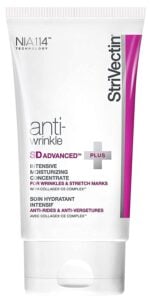
Keeping the skin moisturized can make dry calf skin feel softer and temporarily look smoother, even though hydration alone does not rebuild a stretch mark.
If your calves feel dry, a rich moisturizer can be useful for comfort (such as this one from StriVectin), but do not expect a moisturizer to erase established stretch marks.
Look for ingredients that support hydration and barrier comfort. Hyaluronic acid has some evidence for making early stretch marks less noticeable, while many other popular cream ingredients have limited evidence for existing striae.
Ingredients such as ceramides, glycerin, hyaluronic acid, centella asiatica, peptides, or vitamin E may make a formula pleasant and moisturizing, but their presence does not guarantee that a cream will fade stretch marks.
Firming creams and oils can improve softness and surface feel, but evidence that they remove or prevent stretch marks is limited.
Use moisturizer because it keeps your skin comfortable and hydrated, not because hydration is a guaranteed stretch-mark treatment.
2. Vitamin E Oil
Vitamin E is an antioxidant commonly added to body oils and moisturizers.
As an antioxidant, vitamin E is commonly included in moisturizers and body oils, but that does not make it a proven stretch-mark treatment.
In an oil or lotion base, it can contribute to an emollient, moisturizing feel, although the finished product matters more than vitamin E alone.
Vitamin E oil (such as this one from Pura D’or) can soften dry skin, but studies have not shown vitamin E oil to reliably fade or prevent stretch marks.
If your calves feel dry, an oil can soften the surrounding skin and reduce roughness, but that is different from changing the scar tissue itself.
Vitamin E also appears in many body lotions and sunscreens, where it functions as part of the overall formula rather than as a proven stretch-mark treatment.
3. Collagen
Collagen is a structural protein that helps give skin strength and support.
Natural collagen production gradually declines with age, but that does not mean topical collagen can replace the deeper dermal collagen involved in stretch marks.
Collagen is also a popular cosmetic ingredient in firming, stretch-mark, and anti-ageing creams, mainly for its moisturizing and film-forming properties.
Topical collagen in a cream mainly acts as a moisturizing or film-forming ingredient; it does not simply replace the collagen deeper in the dermis.
Skin elasticity is the skin’s ability to stretch and grow, and to return to its original position.
A collagen-containing cream can still be pleasant for dry calf skin, but it should not be marketed as rebuilding stretch-marked skin by itself.
If you like the texture, a body lotion with collagen and aloe vera, like this one from Bloom, can be used for hydration rather than as a guaranteed stretch-mark remover.
Stretch marks involve changes in dermal collagen and elastin, but simply applying topical collagen or peptides does not guarantee that existing marks will disappear.
4. Centella Asiatica
Keeping the skin barrier comfortable is useful, especially if you are using active ingredients that can make the calves dry or irritated.
A compromised skin barrier may feel dry, tight, stinging, itchy, or irritated. Hyperpigmentation and stretch marks themselves do not automatically mean the barrier is damaged.
Centella asiatica is used in many soothing skincare formulas, and some research suggests centella-containing products may help with stretch-mark prevention. Evidence for fading established marks is much less certain.
Opting for creams containing centella asiatica or ceramides can help keep the surrounding skin moisturized and comfortable.
Barrier support becomes especially useful if you use an exfoliating body product or prescription retinoid that makes the area dry or irritated.
5. Peptides
Peptides are another common supporting ingredient in body moisturizers marketed for firmness or texture.
Peptides can be useful supporting ingredients in moisturizers, but there is not strong evidence that a peptide body cream will lighten established stretch marks on its own.
Peptides are short chains of amino acids. Some cosmetic peptides are designed to signal skin-supporting processes, but results depend on the specific peptide and formula.
A well-formulated moisturizer can improve the surface feel of calf skin, but do not expect peptides alone to erase the color or indentation of a mature stretch mark.
6. Retinoids
Prescription tretinoin has better evidence than most topical ingredients for making newer stretch marks less noticeable.
Topical retinoids tend to be most useful on early stretch marks. Older white or silver marks are generally less responsive to creams.
Retinoids can also cause dryness, redness, peeling, and irritation, so they should be introduced carefully.
Tretinoin may help newer stretch marks look more like the surrounding skin by supporting collagen remodeling.
Do not use topical retinoids during pregnancy. If you are breastfeeding or trying to conceive, ask your healthcare professional before using them.
According to the Mayo Clinic, “Tretinoin, when it works, helps to rebuild a protein in the skin called collagen, making the stretch marks look more like your normal skin.”
7. Chemical Exfoliants
Chemical exfoliants can smooth rough body skin, but frequent exfoliation is not a proven way to remove stretch marks from the calves.
Exfoliation removes surface dead cells, while stretch marks involve deeper changes in the dermis. That is why an acid body lotion may improve surrounding texture without erasing the mark itself.
AHAs and BHAs are chemical exfoliants that can be useful for roughness, clogged follicles, body acne, or ingrown hairs when chosen appropriately.
They may help with ingrown hairs, post-inflammatory discoloration, or body acne around the calves, but those are separate concerns from stretch marks.
AHAs/BHAs
AHAs (alpha hydroxy acids) are water-soluble exfoliants commonly used for dry, rough, or uneven-feeling skin.
AHAs are water-soluble and mainly exfoliate the skin’s surface, which can improve roughness but does not directly rebuild a dermal stretch mark.
Some popular AHAs are lactic, glycolic, and mandelic acid.
BHAs, most notably salicylic acid, are oil-soluble exfoliants that are more relevant to clogged follicles, body acne, and ingrown hairs than to stretch marks themselves.
BHAs, especially salicylic acid, are oil-soluble and can work inside oily follicles, which makes them particularly useful for clogged pores and body acne.
They can be helpful for acne and ingrown hairs, but they should not be treated as a direct therapy for stretch-mark scars.
If you use an exfoliating body product, use it for the surrounding texture or discoloration rather than expecting it to rebuild a mature stretch mark.
8. SPF
When your calves are exposed to the sun, sunscreen (such as this La Roche-Posay sunscreen) helps protect the surrounding skin from UV damage.
Sun protection is especially important if you use retinoids or exfoliating acids that leave the area irritated or more vulnerable to visible discoloration.
Sunscreen does not erase stretch marks, but it can help prevent tanning or sun-related pigment changes from increasing the contrast between stretch marks and surrounding skin.
Use a broad-spectrum sunscreen on exposed legs and reapply according to the product directions, especially during extended outdoor exposure.
Non-Surgical Services To Lighten Stretch Marks On Calves
Visit a board-certified dermatologist or other appropriately qualified medical professional if you’re interested in reducing stretch marks with procedures such as lasers, microneedling, or stronger chemical peels.
Whether you use at-home care or a professional procedure, improvement varies and no method can guarantee complete removal.
Professional options can target color, texture, or both, but the best procedure depends on whether the marks are new or mature and on your skin tone.
Options may include microneedling, laser or light therapy, radiofrequency, microdermabrasion, or chemical peels.
Each option has different benefits, downtime, costs, and risks, which should be discussed during a consultation with an appropriately qualified clinician.
Chemical Peels
Chemical peels remove controlled layers of the skin and are more established for concerns such as uneven tone and texture than for stretch marks specifically.
They are usually designed for the face, but some clinics may offer exfoliation services for the body.
For body skin, peel strength and technique matter because overly aggressive treatment can cause irritation or post-inflammatory pigment changes, particularly in deeper skin tones.
If a chemical peel is being considered specifically for calf stretch marks, ask a dermatologist what improvement is realistic and whether another procedure has better evidence for your type of striae.
Laser Therapy
Laser and light therapies can be used to make some stretch marks less noticeable by targeting color, collagen remodeling, or both.
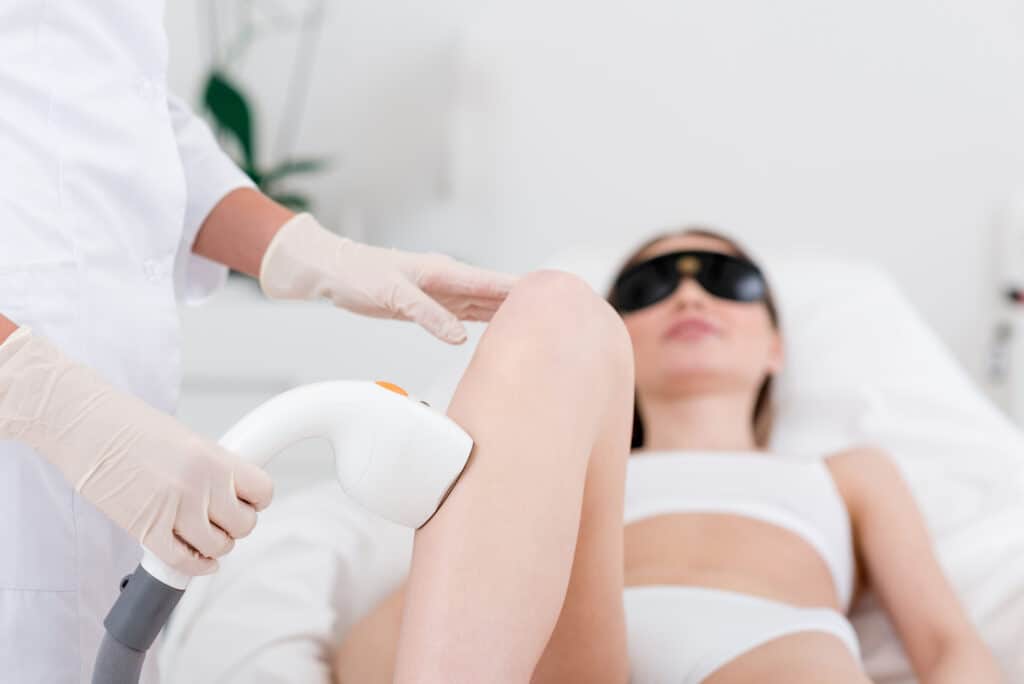
Different devices are chosen for newer red or purple marks versus older pale marks, so the exact treatment should be matched to the stretch mark and skin tone.
Some fractional lasers are used to encourage collagen remodeling and improve texture.
Healthline states that Excimer Laser Therapy works to “stimulate skin color (melanin) production so that stretch marks match the surrounding skin more closely.”
The best laser depends on whether your main concern is color, indentation, or both, and results vary from person to person.
A dermatologist can also discuss the risk of post-inflammatory hyperpigmentation and choose settings appropriate for your skin tone.
Dermarolling
Microneedling is a professional procedure used for concerns including scars, uneven texture, and stretch marks.
Although at-home dermarollers are widely sold, professional microneedling uses controlled needle depth and sterile technique. For stretch marks, professional treatment is a safer and more predictable option than aggressive DIY rolling.
According to Healthline, “Dermarolling works by creating microscopic wounds which induce collagen and elastin production.”
The procedure creates controlled microscopic channels that stimulate a wound-healing response and collagen production, which may make stretch marks less noticeable over a series of treatments.
Professional microneedling can be suitable across a wide range of skin tones and may carry less risk of pigment change than some laser approaches, although side effects and downtime are still possible.
Can You Prevent Stretch Marks?
Stretch marks can occur due to changes within your body, or they can run through your family. Some people are more prone to stretch marks than others.
Because genetics, hormones, and the speed of body change all matter, prevention is not completely within your control.
Unfortunately, stretch marks cannot always be prevented, even with careful skincare.
Stretch marks are usually harmless and extremely common, although how someone feels about their appearance can still affect confidence.
Keep Your Skin Hydrated
Moisturizing helps with dryness and comfort, but drinking extra water or applying lotion has not been proven to reliably prevent stretch marks.
A well-moisturized skin barrier can still make other body-care steps more comfortable, especially if you use exfoliating or prescription products.
Muscle Mass
Rapid changes in body size are associated with stretch marks, but body composition should be managed for overall health, not solely to prevent striae.
Growth spurts, pregnancy, rapid weight change, and rapid muscle gain can all contribute. During pregnancy or medical treatment, follow your healthcare professional’s guidance rather than trying to restrict normal body changes to avoid stretch marks.
Do not try to prevent stretch marks by restricting healthy growth, pregnancy-related changes, or medically necessary treatment.
Focus instead on overall health, comfortable skin care, and realistic expectations about what topical products can and cannot change.
When To Talk To A Dermatologist
If you have questions about lightening stretch marks on your legs, talk to a dermatologist.
A dermatologist is particularly useful if home care has not helped enough or if you are considering a procedure with meaningful cost, downtime, or pigment-change risk.
A dermatologist can assess how old the marks are, your skin tone, their cause, and the realistic benefit and risks of treatment.
You can discuss a range of options, including laser or light therapy, microneedling, radiofrequency, prescription tretinoin for newer marks, and other procedures.
The Takeaway
Stretch marks are a common type of scar that can develop when the body changes rapidly.
There is no guaranteed way to erase them, but time and selected treatments can make some stretch marks less noticeable.
Stretch marks often fade over time, but mature marks may remain visible as lighter or slightly indented lines.
The same general treatment options can be considered for marks on the calves, thighs, buttocks, abdomen, or other body areas.
For newer marks, prescription tretinoin or hyaluronic-acid-containing products may help in some cases. For older or more noticeable marks, microneedling or laser/light procedures may offer more visible improvement than ordinary body creams.
At-home moisturizers mostly improve comfort and surface texture, while professional treatments can target the scar more directly but still require realistic expectations and often multiple sessions.
The age and color of a stretch mark matter because newer colored marks and older pale marks tend to respond differently to treatment.
Depending on skin tone and age, they may appear white, silver, pink, red, purple, brown, or blue-toned.
They may also vary in width, depth, texture, and how sharply they contrast with the surrounding skin.
If you’re looking to lighten stretch marks on your calves, start by identifying whether they are newer colored marks or older pale marks. That distinction can help determine whether a topical treatment is worth trying or whether a procedure such as microneedling or laser therapy is more realistic.
If you want a more targeted plan, a dermatologist can help match the treatment to your skin tone, the age of the marks, and your tolerance for cost, downtime, and side effects.
Whether you prefer to leave your stretch marks alone or explore ways to make them less noticeable, either choice is reasonable. The important part is using safe treatments and realistic expectations.
Related Articles
Best Skin Tightening Oils For Stomachs
Shampoo To Get Rid of Grey Hair – Does It Exist?
Best Shampoo Bars For Colour-Treated Hair