Can You Dry Gel Polish Without UV Light? (The Best Hacks)
Gel nails offer a long-lasting and durable finish that resists chipping.
Getting gel nails at home can be tricky because you need the right products and a compatible curing lamp.
This can include gel base and top coats, colour, prep products, and a UV or LED nail lamp. Some of these tools can be pricey or inconvenient to buy.
Professional nail lamps can cost more than a basic at-home setup, especially when they are designed for a specific gel system.
Some professional nail systems are primarily sold through salon or professional channels, while many consumer gel lamps are widely available.
Affordable lamps are easy to find, but the key issue is compatibility with the gel formula. A lamp with the wrong wavelength or insufficient output may leave gel under-cured even if the surface feels hard.
Can you dry gel polish without UV light?
True gel polish needs the correct UV or LED lamp to cure properly. Household hacks such as ice water, cooking spray, sunlight, or quick-dry spray may change how the surface feels, but they do not reliably cure gel chemistry and should not be used as substitutes for the lamp recommended by the manufacturer.
Gel polish is different from regular nail polish because it does not simply air-dry. It needs light-activated polymerization to cure through the full layer.
If you do not have a compatible lamp, the safer option is to use a non-gel, air-dry polish that gives a gel-like finish rather than trying to harden true gel temporarily.
So, what can you do if you want a gel-like manicure but do not have a UV or LED lamp?
Why Are UV Lights Necessary To Cure Gel?
Gel has a unique makeup, unlike regular polish.
It is formulated with reactive resins, monomers, oligomers, and photoinitiators that harden through a light-triggered polymerization reaction.
True gel cannot fully cure without the type of UV or LED light specified for that formula.
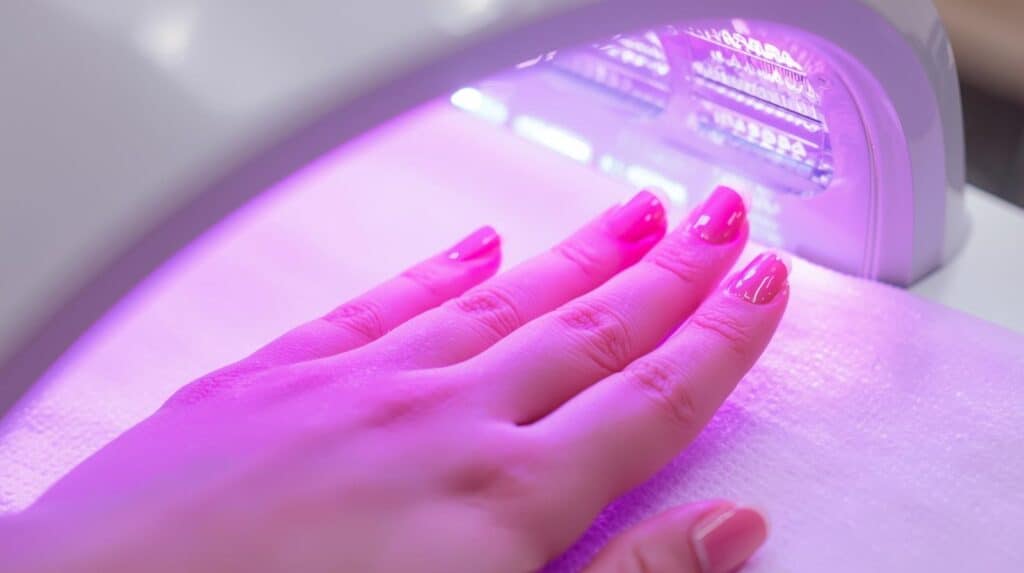
It is a photochemical reaction that takes place under a compatible UV or LED lamp. It is also important to know exactly which gel system you are using.
If a true gel product is used without the correct lamp, it may remain partially cured or uncured beneath the surface. That is not just a longevity problem, because repeated skin contact with uncured gel can increase the risk of irritation or acrylate allergy.
Types Of Gel
There is more than one gel type, and each serves a specific purpose.
Some common types of gel include hard, soft, or gel polish.
Different gel systems can be layered or combined in some services, but only when the products are designed to work together and are cured according to their instructions.
Hard Gel
Hard gel is the most durable type of gel enhancement.
Hard gels often sculpt new shapes, create nail extensions, or protect your nail plate.
Hard gel requires a compatible curing lamp. It should not be treated as an air-dry product.
Hard gels also provide the ideal base for nail art or for creating long nail lengths.
You may notice some hard gels are referred to as builder gels.
Soft Gel
Soft gel is more durable than polish but not as strong as a hard gel.
Many soft gels have a soak-off formula that can be removed with acetone after the surface is properly filed or broken, depending on the product. Some soft-gel systems are used as overlays, while full-cover soft-gel tips can also create extensions.
Soft gel is still a light-cured system, so it also needs the lamp recommended for that product.
Gel Polish
We might first think of gel polish when someone mentions gel nails. Gel polish offers both color and protection in a single step.
True gel polish should not be cured without a compatible nail lamp. If you do not have one, switch to a gel-effect polish that is specifically labelled to air-dry.
Also, gel polish may not be as thick as hard or builder gels.
What To Do If You Don’t Have A UV Or LED Lamp
No compatible lamp? Do not try to improvise a cure with household products. The safest workaround is to choose a non-UV, air-dry polish designed to mimic a gel finish.
Common internet hacks use household items, but they do not provide the controlled wavelength and exposure needed to polymerize true gel properly.
Even if a hack makes the top of the polish feel firmer, that does not confirm that the entire layer is cured. A shiny or hard surface can still hide uncured material underneath.
If a product truly air-dries without a lamp, it is better thought of as a gel-effect or long-wear polish, not a conventional light-cured gel.
Cooking Spray
Cooking spray does not cure gel polish. It can leave an oily film on the nail, but it cannot replace the light-triggered reaction required by true gel.
Do not treat cooking spray as a DIY topcoat for gel.
If you have already applied gel and realise you do not have the correct lamp, remove the uncured product from the nail and skin rather than coating it with another household product.
The oils or propellants in cooking spray do not polymerize gel resins, so they cannot make uncured gel safe or properly hardened.
Ice Baths
Ice water is another popular internet hack, but it does not cure true gel polish.
Soaking freshly applied gel in ice water may make the product feel firmer temporarily, but it does not complete the light-activated curing reaction.
Cold temperatures cannot substitute for UV or LED curing. Any uncured gel should be removed rather than left on the nail.
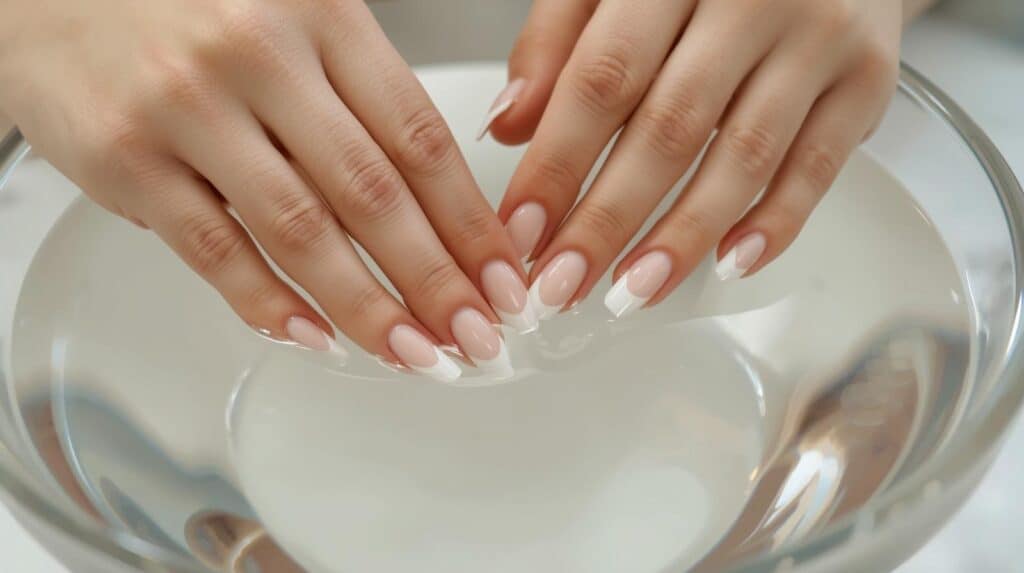
Ice may be useful for many household purposes, but it is not a curing tool for gel nails.
Do not rely on an ice bath to harden gel. If the formula requires a lamp, cure it with the recommended lamp or remove it.
Work In Thin Coats
A common issue with gel polish is applying it too thickly. Thick layers can cure unevenly because light may not penetrate the entire coat as effectively.
A better technique is to work in thin, even layers and cure each coat for the time specified by the gel manufacturer.
Apply only enough gel to create a smooth, even coat. Thin application supports more consistent curing, but it still requires the correct lamp.
Thin coats reduce the chance of a hard surface forming over under-cured material, although proper lamp compatibility remains essential.
Use A Non-UV Formula
Many nail brands sell gel-effect or no-light polishes.
These polishes are designed to mimic the glossy, plump look of gel nails without requiring a curing lamp.
Most products marketed as no-light “gel” are technically air-dry nail polishes with a gel-like finish, not conventional light-cured gel systems.
No-light gel-effect polishes are the most practical option if you do not have access to a compatible lamp because they are formulated to air-dry normally.
Bask In The Sun
Do not use sunlight as a substitute for a nail lamp.
The sun does emit UV radiation, but sunlight does not provide the controlled wavelength, intensity, or exposure time needed to reliably cure a gel system.
Intentionally increasing sun exposure to cure nails also adds unnecessary UV exposure without giving you a dependable manicure result.
Apply A Quick-Dry Spray
Nail brands also formulate quick-dry sprays, but these are generally intended for conventional air-dry nail polish.
A quick-dry spray may help regular polish solvents evaporate faster, but it does not replace UV or LED curing for true gel polish.
Use quick-dry products only as directed for the type of polish they are made for.
Do These Hacks Offer the Same Results as a UV Light?
These lampless hacks should not be used to cure true gel. The issue is not simply that the finish may look less professional, but that the product may remain chemically under-cured.
If you want a manicure without a lamp, use a polish specifically formulated to air-dry rather than trying to make true gel “temporarily” harden.
Different gel systems require different lamps and curing times, so always follow the instructions for the specific product you are using.
Hard gel, soft gel, builder gel, and gel polish all require proper curing when they are true light-cured products.
A surface that feels firm is not enough to prove that the product cured through the full thickness of the layer.
So, if you do not have the right lamp, the safest choice is to switch to a no-light gel-effect polish or wait until you can cure the gel correctly.
Related Articles
Hard Gel Vs Soft Gel (Everything You Need To Know)
What Is Gelish Structure Gel? (Complete Guide)