
White To Black Shampoo (What Is It And Does It Work?)
Grey and white hairs become more noticeable for many people over time, and not everyone wants to cover them with permanent colour at every touch-up.
Some people embrace white or silver strands, while others prefer to blend or darken them with a lower-commitment option between salon visits.
Frequent colouring can contribute to dryness or breakage, especially when permanent dye, lightener, or repeated overlapping applications are involved.
Regular salon colour services can also become expensive when grey regrowth needs frequent maintenance.
One alternative is a white-to-black shampoo designed to gradually darken or blend visible grey.
What is white-to-black shampoo, and does it work?
White-to-black shampoo is a broad label for shampoos that make grey or white hair look darker. Some deposit colour directly, while others use oxidation-based or plant-derived darkening systems. They can camouflage grey, but they do not restart natural melanin production or permanently reverse greying.
The term white-to-black shampoo is not a standardized cosmetic category, so two products with the same marketing description may work very differently.
Some products are marketed toward men or facial hair, while others are designed for scalp hair and are marketed as unisex.
Results depend heavily on the starting hair colour, percentage of grey, porosity, formula, contact time, and how consistently the product is used.
A darkening shampoo may help camouflage existing grey between colour appointments, but it cannot prevent new grey hairs from growing in or restore pigment production inside the follicle.
The key is to understand what type of darkening system you are using, how gradual the result is likely to be, and what maintenance or allergy testing the label requires.
White To Black Shampoo At A Glance
- What it does: makes grey or white hair look darker by depositing colour or using another surface-darkening system.
- What it does not do: restore natural melanin production, permanently reverse greying, or stop new grey growth.
- Best for: gradual grey blending, lower-commitment maintenance, or extending the look between full colour services.
- Main limitation: results can be translucent, gradual, uneven, or different from the shade shown in marketing images.
- Main precaution: follow allergy-test and strand-test instructions because some formulas contain colourants or other ingredients that can irritate skin.
Think of these products as cosmetic grey-darkening shampoos, not treatments that turn the hair follicle’s biological clock back.
What Is White To Black Shampoo?
White-to-black shampoo is an umbrella term rather than one specific formula type.
Depending on the formula, the product may deposit pigment or gradually darken the hair surface so white and grey strands look less noticeable.

Its primary purpose is cosmetic darkening. Depending on the product, that can involve deposited pigments, oxidative colourants, or plant-derived darkening compounds. Do not assume every white-to-black shampoo is dye-free simply because it is marketed as herbal or natural.
Some formulas darken grey gradually over repeated washes, while others show a visible change sooner. Coverage is usually less predictable and less opaque than permanent hair dye, and porosity can make resistant or highly porous strands take colour differently.
How Does White To Black Shampoo Work?
Each white-to-black shampoo can use a different darkening system, so check both the ingredient list and directions rather than assuming every product works the same way or avoids conventional colourants.
One brand, Moda Moda, markets a polyphenol-based system designed to darken hair gradually through oxidation-related reactions on the hair surface.
Some white-to-black shampoos include herbal extracts or plant-derived color compounds, but these ingredients do not add melanin back into the hair shaft or restart melanin production.
What Results Can You Realistically Expect?
Results depend on the product and your starting hair. A person with scattered greys in medium-brown hair may see a different result from someone with almost completely white, coarse, or highly porous hair.
- Scattered greys: gradual darkening may blend them into the surrounding hair rather than cover them completely.
- Mostly white or silver hair: the result may look more translucent or uneven until enough colour builds up.
- Porous or chemically treated hair: some sections may grab colour faster and become darker than less porous areas.
- Previously coloured hair: existing dye can affect the final tone and may complicate future salon colour correction.
Because of these variables, a strand test is more informative than assuming the whole head will match a product photo.
Benefits Of White To Black Shampoo
The main reason to use a white-to-black shampoo is to blend grey more gradually than a traditional permanent colour service.
Some people choose white-to-black shampoo because it feels simpler or more gradual than a traditional dye service.
Some formulas are convenient to use in the shower, but not all are truly dye-free. Always check the current ingredient list and product instructions.
The main cosmetic benefit is gradual darkening or grey blending. Claims about increased hair density or growth should be treated separately from the color effect.
Darkens Grey Or White Hair
The main benefit of white-to-black shampoos is that they can make white and grey hair look darker or less noticeable without claiming to restore the follicle’s original pigment production.
Some formulas provide gradual color without a standard permanent-dye process, but many still rely on colorants or oxidation chemistry.
Depending on the product, pigments or darkening compounds can build on the hair surface over repeated use and make grey strands appear darker.
Formulas can vary, so some shampoos yield a dark, blackish hue, while others turn brown.
Some products deepen gradually with repeated use, while others plateau or produce uneven results depending on porosity and starting color.
Hair Density Claims Need Caution
Some white-to-black shampoos include marketing claims around hair growth or density, but those claims are separate from their darkening function.
Some formulas include conditioning or scalp-care ingredients, but that does not mean they stimulate follicles or increase hair growth.
A healthy scalp supports normal hair growth, but shampoo alone cannot guarantee increased density or faster growth.
Scalp massage may temporarily increase local blood flow and can feel relaxing, but this should not be presented as proof that a darkening shampoo increases hair density.
There is not enough evidence to say that a brief massage during shampooing will reliably create a fuller scalp.
May Contain Botanical Ingredients
Some white-to-black shampoos are marketed around herbal or plant-derived ingredients.
Each shampoo may contain various ingredients, but common ones include aloe vera, black sesame, black cumin, and poppy flower.
Each ingredient has a different cosmetic role. Some may contribute color, fragrance, conditioning, or scalp feel, but “natural” does not automatically mean effective or non-irritating.
Always read your product’s ingredient list to understand its purpose.
May Improve Hair Feel
Some formulas include conditioning ingredients that may improve how the hair feels after washing.
Depending on the formula, the hair may feel softer, smoother, or easier to manage, while other darkening shampoos can feel drying.
Color changes may build gradually, and conditioning results depend on the formula rather than requiring a fixed timeline.
No single white-to-black shampoo is guaranteed to suit every hair type, texture, scalp condition, or color history.
Some are geared towards men’s hair, while others cater to everyone.
Downsides Of White To Black Shampoo
Evidence for many white-to-black shampoos is limited compared with conventional hair-color systems, and product performance varies widely by formula.
The main tradeoffs are maintenance, variable colour payoff, possible staining, irritation risk, and less predictable coverage than conventional permanent dye.
These hair-darkening shampoos can also become an ongoing expense when regular use is needed to maintain the effect.
Many take time to build visible colour and may need regular use to maintain the result.
You may not have an opaque or even finish like with hair dye.
Must Be Used Frequently To Maintain Results
White-to-black shampoos may need to be used regularly because deposited or surface-darkening effects can fade as the hair is washed and new grey growth appears.
Some formulas behave like semi-permanent or gradual color because pigment or darkening compounds build on the hair surface, but not every product fits the same technical category.
Frequency depends on the specific product, how quickly the effect fades, and how dark you want the result to remain.
Also, each brand may vary, so it’s crucial to double-check the label on your product to see how frequently you must use it to keep your color.
Possible Irritation
Another important consideration is the possibility of irritation or an allergic reaction, particularly when a formula contains colourants, fragrance, preservatives, or botanical extracts.
Herbal and plant-derived ingredients can still cause irritation or allergy, and they are not automatically gentler than synthetic cosmetic ingredients.
Some individuals can be sensitive or allergic to natural ingredients.
Treat a new darkening shampoo like any other colour-related cosmetic: follow the label closely and stop using it if you develop burning, swelling, rash, or persistent scalp irritation.
You can conduct a patch test to see how your skin reacts to your white-to-black shampoo.
May Not Be As Opaque As Color
Many gradual darkening shampoos need repeated use before the color becomes obvious, although some products may show a visible change sooner.
So you may not get a full, opaque effect after one use.
Do not assume that white-to-black shampoos are dye-free. Check the ingredient list because different products use very different darkening systems.
Also, each shampoo may vary by color payoff, and some formulas can appear more pigmented than others.
Takes Time To See Full Results
Many white-to-black shampoos are not intended to provide instant, fully opaque coverage.

You may see a noticeable difference after one use, but gradual formulas often need repeated applications before the final depth becomes clear. Some grey strands may remain more resistant or look more translucent than permanently dyed hair.
This can be a practical option for people who want to reduce the frequency of full color services or blend greys more gradually.
Who Should Try White To Black Shampoo?
White-to-black shampoos may help blend visible greys between hair color services, depending on how well the shade matches your hair.
Some people may use them instead of frequent permanent dye, but they may not provide the same level of coverage or shade control.
They are most practical for people who are comfortable with a gradual, maintenance-based approach rather than one-step opaque coverage.
This may be less suitable if you want instant, uniform, opaque colour or precise shade control similar to a conventional salon colour service.
White-to-black shampoos offer a more gradual approach to darkening grey hair, but “natural” is a marketing description rather than a safety guarantee.
How Effective Is White To Black Shampoo?
White-to-black shampoos vary substantially by formula, so there is no single effectiveness level for the entire category.
Some formulas build toward a deep black or black-brown result, while others create a softer brown or grey-blending effect.
Gradual formulas may take several washes before you can judge the full effect of the white-to-black shampoo.
Your application method can also determine how even or saturated the strands become.
Who Should Be Cautious With White To Black Shampoo?
Extra caution is sensible if you have sensitive skin, a history of hair-colour allergy, an irritated scalp, very porous hair, or plans for a major salon colour change.
Some darkening shampoos may contain conventional dye ingredients even when the front label emphasizes herbs or botanicals. If the manufacturer requires an allergy alert test, follow those directions every time the label instructs you to do so.
If you develop facial swelling, widespread hives, trouble breathing, or another severe reaction after a hair-colour product, seek urgent medical care rather than attempting another application.
How To Use White To Black Shampoo
White-to-black shampoo can often be used during a normal wash routine, but the exact application method depends on the formula.
Many formulas are used similarly to regular shampoo, although some require gloves, specific contact time, careful distribution, or extra rinsing because they contain colour-depositing or darkening ingredients.
Following your brand’s directions is the best way to get the most out of your white-to-black shampoo.
Always Follow Your Brand’s Directions
White-to-black shampoo can vary by brand, manufacturer, and formula.
Following the written directions can improve consistency and reduce avoidable irritation or uneven color.
Some hair darkening shampoos are more versatile or straightforward.
Some white-to-black shampoos need a short contact time before rinsing, while others are used differently. Follow the exact timing on the label.
Apply To Damp Hair
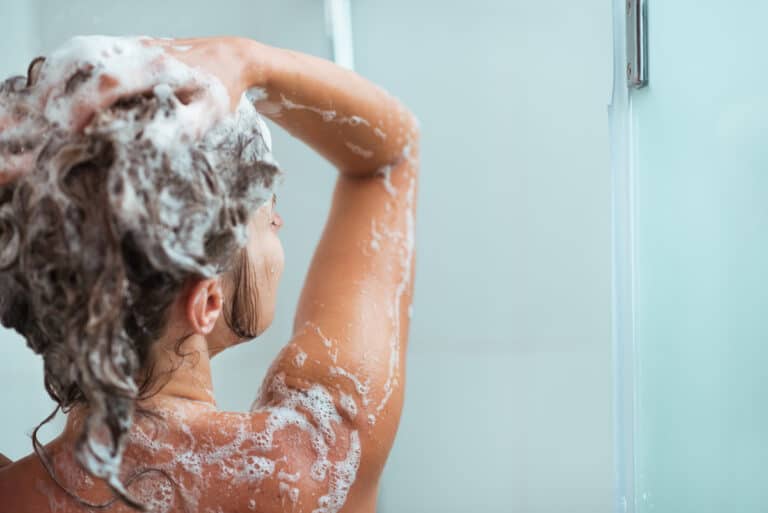
Most shampoos are applied to wet hair in the shower, and most white-to-black shampoos are used the same way.
Use the amount recommended by the manufacturer and distribute it according to the product directions.
Even distribution matters because missed areas can create patchy or inconsistent darkening.
Massage
Some white-to-black shampoos recommend a scalp massage after application (we like this silicone massage brush for a gentler touch).
Some brands make claims around hair growth, density, or scalp circulation, but these should not be treated as established benefits of the darkening shampoo category.
A gentle massage can help distribute shampoo and may temporarily increase local blood flow, but it is not proven to increase density or make the color darker beyond improving product coverage.
Let The Formula Develop
Next, allow the shampoo to remain on the hair for the exact contact time stated on the label.
Many darkening shampoos need some contact time for pigments or darkening compounds to interact with the hair, which is why their directions may differ from ordinary shampoo.
Contact time varies by product. Use the exact timing on the label rather than assuming every formula needs 3-10 minutes.
White-to-black shampoos may need contact time so the active color system can distribute evenly across the strands.
Correct contact time can help create a more even, predictable darkening result without unnecessarily extending exposure.
Rinse And Dry
After the developing time is up, you’ll want to rinse your shampoo.
Because white-to-black shampoos contain pigment, check how compatible your shampoo is with conditioner, as the strands may feel dry afterward.
Condition your hair, if possible, and then rinse.
Take your time rinsing the shampoo thoroughly to avoid leaving any product behind, which can cause scalp irritation.
Once the hair is dry, assess the colour in good lighting before deciding whether you need another application.
What To Do Before Using White To Black Shampoo
Before adding a white-to-black shampoo to your routine, it is worth checking both skin tolerance and the colour result on a small area.
This is especially useful if you have reactive skin, very porous hair, previous colour, or concerns about an unexpectedly dark result.
Two useful precautions are a patch or allergy test when required by the label and a separate strand test for colour payoff.
Patch Test
A patch test can help screen for irritation or allergy before wider use, although it cannot guarantee that no reaction will occur later.
Any new shampoo can irritate a sensitive scalp, especially if it contains fragrance, botanical extracts, or colorants.
Follow the manufacturer’s allergy-test instructions exactly. Some hair-color products call for testing 48 hours before use, while other shampoos have different guidance.
Test Strand
Another way to test a white-to-black shampoo is with a test strand.
A test strand can help you see what your hair will look like with a new color.
This is especially useful when you are unsure how quickly your particular hair will darken.
Take a small section of hair from the back of your head, apply the shampoo, wait, and rinse.
Once the strand dries, assess the depth, undertone, evenness, and how the hair feels before applying the product more widely.
Consult With A Hairdresser
Finally, you can always consult a professional hairdresser about any concerns with white-to-black shampoo.

A stylist can also help assess whether a darkening shampoo is likely to blend well with your existing color or interfere with future salon services.
Best White To Black Shampoo
If you want to try a white-to-black shampoo, compare the darkening system, directions, allergy-test requirements, expected maintenance, and the shade the product is designed to create.
Because formulas vary so widely, the most recognizable product is not automatically the best match for your starting colour or scalp sensitivity.
Reading the current label and performing the recommended tests can help you avoid surprises before full application.
Moda Moda Naturally Grey Reducing Shampoo

Moda Moda offers a gradual darkening shampoo designed to reduce the contrast of grey hair over time.
The product is marketed to gradually make grey strands look darker with repeated use rather than providing instant permanent coverage.
Moda’s Naturally Grey Reducing Shampoo combines cleansing with a gradual darkening system. How conditioning or drying it feels will depend on your scalp and hair type.
In addition, it contains herbal and natural components like black sesame, black cumin seed, and black cherry.
These botanical ingredients are part of the formula’s positioning, but the gradual darkening effect should not be attributed to improved hair health alone.
Brand guidance may suggest several weeks of repeated use before the darkening effect becomes more noticeable. Results will vary by starting color, grey percentage, porosity, and frequency of use.
Follow the product’s current directions for contact time rather than relying on a universal three-minute rule.
This may be a lower-commitment way to blend white or grey hair than permanent dye, although irritation and color buildup are still possible.
White To Black Shampoos Vs Hair Darkening And Color Depositing Shampoos
White-to-black hair darkening and color-depositing shampoos can fall under the same hair category.
These products all aim to darken or tint the hair during washing, but the chemistry can differ substantially between traditional color-depositing shampoos and oxidation-based darkening formulas.
Gradual and semi-permanent color effects typically fade with washing, so maintenance frequency depends on the formula and desired result.
Some white-to-black shampoos emphasize herbal ingredients, but that does not define the entire category and does not guarantee a dye-free formula.
White To Black Shampoo FAQs
Can White To Black Shampoo Permanently Reverse Grey Hair?
No. These products can make existing grey or white strands look darker, but they do not restart natural melanin production inside the follicle. New hair can continue to grow in grey.
Is White To Black Shampoo The Same As Hair Dye?
Not always. Some products behave like colour-depositing shampoos, while others use oxidation-based or different darkening systems. That is why the ingredient list and directions matter more than the category name.
How Long Does White To Black Shampoo Take To Work?
It depends on the formula. Some products show a visible change after one use, while gradual darkening shampoos may need repeated washes before the final depth becomes clear.
Can White To Black Shampoo Stain Skin, Towels, Or The Shower?
Colour-depositing or darkening products can sometimes transfer or stain, especially before they are thoroughly rinsed. Follow the label, rinse carefully, and use gloves if the manufacturer recommends them.
Can You Use White To Black Shampoo Before A Salon Colour Service?
You can, but tell your stylist what you have been using. Residual pigment or darkening compounds may affect how a later colour or lightening service behaves, especially when you want to go substantially lighter.
Takeaway
White-to-black shampoos can be useful if you prefer gradual grey blending and are comfortable with maintenance that is less predictable than permanent colour.
They may help extend the time between color appointments or reduce how often you use permanent dye, depending on the level of grey coverage you want.
They can feel more straightforward because they are used in the shower, but ingredient systems vary and should not automatically be described as natural or dye-free.
Many products include plant extracts alongside their darkening system, but scalp stimulation and hair-growth benefits are not established features of the category.
Before committing, follow the product’s allergy-test instructions, test a strand, or consult a stylist if you are unsure how a white-to-black shampoo will interact with your existing colour.
If you plan to return to salon colour later, tell your stylist which darkening shampoo you have been using so they can account for possible pigment or colour buildup.
Related Articles
Best Hair Darkening Shampoos And Shampoo Bars
Shampoo To Get Rid of Grey Hair – Does It Exist?
Best Shampoo Bars For Color-Treated Hair