Why Does My Makeup Look Dry?
When you have a makeup look in mind, it is frustrating when the base turns patchy, flaky, or dry before you are finished.
Even a carefully planned routine can go off track if mascara smears, products pill, foundation separates, or your base starts emphasizing texture.
One of the most common issues is having your makeup look dry or cracked, either during application or after several hours of wear.
There is rarely one single cause. Skin condition, skincare, product texture, application technique, powder, climate, and product compatibility can all affect the finish.
Fortunately, once you identify when and where the dryness appears, it is usually easier to narrow down the fix.
So, why does your makeup look dry?
Your makeup may look dry because the skin underneath is dehydrated or flaky, your base products are too matte or heavy for your skin, you are using too much powder, or your skincare and makeup layers are not working well together. Dry air, long wear, and repeated touch-ups can make the effect more noticeable too.
The solution is usually less about adding more makeup and more about improving the base, simplifying layers, and choosing textures that suit your skin.
Below, we break down the most common reasons makeup looks dry and cracked, plus practical ways to keep the finish smoother throughout the day.
Why Does My Makeup Look Dry And Cracked?
If your makeup suddenly looks flaky, tight, patchy, or cracked, the problem is usually happening either underneath the makeup or between the layers themselves.
Here are some of the main reasons your makeup may be looking drier than expected:
- Lack Of Skin Prep
- Lack Of Skincare
- The Wrong Products
- Wrong Wear Time
- Dry Climate
- No Touch-Ups
Lack Of Skin Prep
Primer can be useful, but it is not mandatory for every makeup routine. What matters more is that the skin underneath is clean, comfortable, and properly moisturized for your skin type.
Some people get a smoother base with moisturizer alone, while others prefer a primer for added grip, smoothing, oil control, or hydration.
The key is to avoid applying makeup over skin that feels tight, flaky, greasy with excess skincare, or irritated.
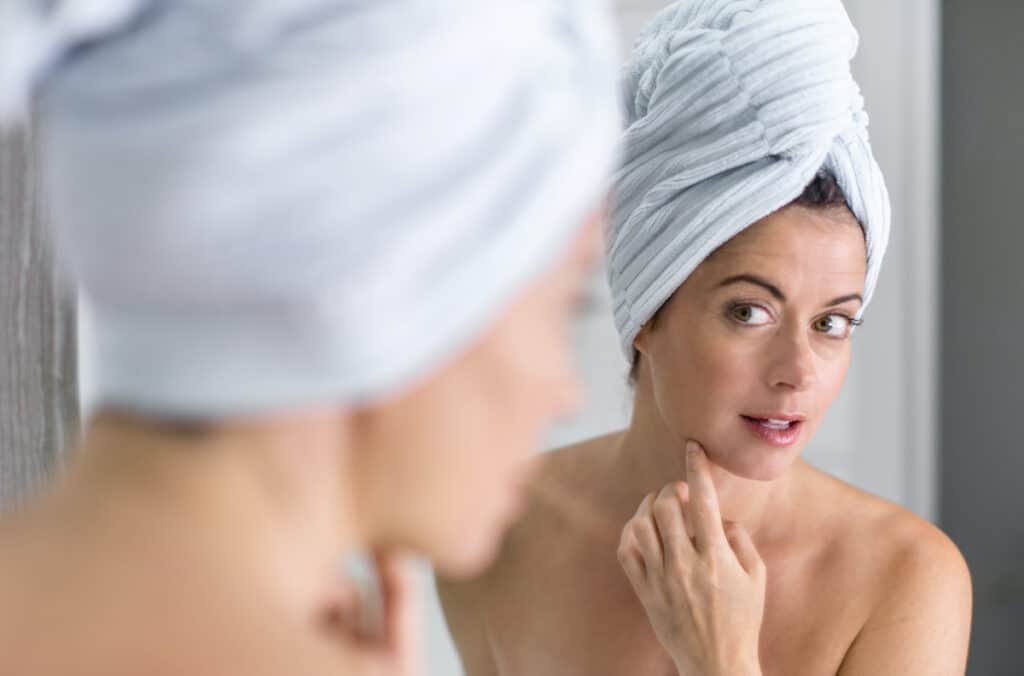
Good prep creates a more even surface so foundation and concealer are less likely to catch on dry patches or separate over excess product.
Skipping primer will not automatically ruin your makeup, but skipping the skincare your skin actually needs can make dryness and texture more visible.
Lack Of Skincare
There is truth to the idea that makeup reflects the condition of the skin underneath, especially when it comes to flakes, dehydration, and rough texture.
This does not mean acne, rosacea, eczema, or textured skin cannot look beautiful under makeup. The goal is comfort and realistic expectations, not perfectly smooth skin.
A gentle routine that supports your skin barrier can make makeup easier to apply, especially if you are prone to dryness or irritation.
Skincare can improve hydration and comfort, but it cannot erase all texture, prevent every breakout, or permanently regulate oil production.
What it can do is give your makeup a more comfortable base and reduce the chance that dryness or irritation will be exaggerated by foundation and powder.
The Wrong Products
Using products that do not suit your skin type, finish preference, or other layers is a common reason makeup looks dry.
Very matte foundations, fast-setting concealers, heavy powder, and incompatible skincare layers can all contribute to a dry or cracked finish.
Later, we will cover how to choose formulas and application techniques that are easier to layer.
Wrong Wear Time
Every makeup product changes as it mixes with skin oil, sweat, facial movement, and the environment over several hours.
Long-wear products can help, but they are not automatically more hydrating. The best option is a formula that lasts well on your skin without becoming tight, flaky, or overly matte.
Dry Climate
Climate can make a noticeable difference. Low humidity and cold air can increase dryness, while heat and humidity can make makeup break down or separate more quickly.
Instead of checking weather for a rigid makeup rule, use it as a clue for how much hydration, powder, and setting you may need that day.
Dry, cold, or air-conditioned environments often call for lighter powder and more comfortable skincare underneath makeup.
Hot or humid weather may work better with thinner layers, targeted powder, and formulas that resist sweat rather than simply adding more moisturizer.
No Touch-Ups
Touch-ups are optional, not required. A well-matched routine may wear comfortably for hours without much maintenance.
If your makeup does start looking dry, adding more powder is usually the wrong move. A small amount of mist or gentle re-blending may help, depending on the products you are wearing.
A quick refresh can improve the finish, but over-spraying or repeatedly adding product can make makeup separate or cake up further.
Solving Dry And Cracked Looking Makeup
Once you have narrowed down the likely cause, focus on the simplest adjustment first: skin prep, formula choice, powder amount, or layering technique.
Here are the most useful ways to troubleshoot dry and cracked-looking makeup.
Proper Skin Prep
Good skin prep can be as simple as cleansing gently and applying a moisturizer that leaves your skin comfortable before makeup.
Primer is optional. Add one only if it solves a specific problem, such as extra grip, smoothing, or a finish you prefer.
- Moisturize Your Skin. Apply makeup to clean skin, then use a moisturizer that suits your skin type. Give it enough time to settle so the surface no longer feels overly wet or slippery.
Humectants such as hyaluronic acid can be useful, but they are not required for a good makeup base. If you like lightweight gel textures, the Neutrogena Hydro Boost Water Gel is one example.
- Waiting Game: You do not need to wait exactly 15 minutes after moisturizer. The right wait time depends on the product and how much you applied.
Start makeup when your skincare has mostly settled and the skin feels comfortable rather than slick. If products are pilling or sliding, try using less skincare or allowing a little more time between layers.
- Hydrating Primer: A hydrating primer can help if your foundation tends to catch on dry areas, but it is optional.
Use a thin layer and make sure it works well with your foundation. One richer option is the Embryolisse Lait-Crème Concentré, which some people use as both skincare and makeup prep.
Skincare
If your skin is dry or flaky, foundation and concealer can make that texture more visible, especially with matte formulas or heavy powder.
The goal is not to scrub the flakes away on the morning of an event, because over-exfoliating can make the skin more irritated and make makeup sit even worse.
If exfoliation is part of your routine, keep it gentle and appropriate for your skin rather than treating it as an emergency fix for every dry patch.
Dry or sensitive skin may need less frequent exfoliation, and inflamed, cracked, or irritated areas are better left alone until the barrier has recovered.
Physical exfoliants are not automatically bad, but aggressive scrubbing can worsen dryness. Chemical exfoliants can also irritate if they are too strong or used too often.
If you use a leave-on exfoliant such as Paula’s Choice 2% BHA Exfoliator, introduce it gradually and follow the label rather than assuming twice a week is right for everyone. BHA is more useful for clogged pores and oiliness than for simply “scrubbing away” dry flakes.
If your skin becomes stingy, tight, red, or increasingly flaky, scale back exfoliation and focus on a simple moisturizer until it feels comfortable again.
This video from Hyram discusses dry and dehydrated skin. Treat it as general beauty content rather than personalized medical advice:
Choosing Cream Products
Cream and liquid products can feel more comfortable on dry skin, but they are not automatically more hydrating than powders. The finish depends on the full formula and how much you apply.
Many people get the best result by using creams or liquids where they want flexibility, then applying powder only where extra setting is actually needed.
If you have oily skin, powder can be useful, but it does not need to cover the entire face.
If you have dry or normal skin, heavy powder can emphasize texture and make the base look dusty or cracked.
Setting powder is often one of the easiest places to reduce product if your makeup looks dry.
Apply it with a small brush or puff only where foundation tends to crease, transfer, or become shiny.
Too much powder does not automatically “clog pores,” but it can make the surface look thick, dry, or textured and can mix unevenly with skin oil later in the day.
Long-Wearing Makeup
Makeup naturally changes after hours of wear, especially around the mouth, nose, under-eyes, and areas with more facial movement.
Primer and setting spray can help with longevity, but the foundation, concealer, skincare, powder, and application technique still need to work together.
Powders are not always longer-wearing than creams. Some creams and liquids are specifically formulated for long wear, while some powders fade or become patchy quickly.
If long-wear formulas feel too dry, try thinner layers or a more flexible finish rather than automatically adding more powder.
Some long-wear base products include the L’Oreal Paris Infallible Glow Foundation and the e.l.f. Camo Concealer. Check the current versions and choose based on the finish that works best for your skin.
Cheek and lip stains can also be useful if you prefer color that leaves less product sitting on top of the skin.
A Proper Refresh
A quick refresh can help when makeup starts to look flat or dry, but the goal is to re-blend what is already there rather than piling on more product.
Keep the touch-up simple. A mist is optional, and a clean sponge, puff, or fingertips can sometimes be enough to press separated areas back into place.
If you use a refreshing mist, apply a light layer and give it a moment to settle before touching the makeup.
If you enjoy a dewy finish, the Elf+ Glow Dewy Mist is one option for refreshing the surface. Avoid soaking the face, since too much liquid can disturb the base.
For blending, a small reusable sponge or these round sponge applicators can be easier to carry than a full-size beauty sponge.
Use applicators clean and only slightly damp if the product you are touching up works well with moisture. A very wet sponge can lift foundation.
Ideal Makeup Tips To Keep Skin Fresh All Day
Here is a basic routine for helping makeup look smoother on dry or dehydrated skin. You do not need every step, and some oily or acne-prone skin types may prefer a lighter version.
Experiment with one adjustment at a time so you can tell which change actually improves your makeup.
Use A Balm
Thick moisturizers and balms are often comfortable at night, but some people with very dry skin also use a small amount before makeup.
If you have eczema, dermatitis, or a damaged skin barrier, keep the routine simple and use products you already tolerate. Persistent inflammation, cracking, or burning may need medical care rather than more makeup prep.
Instead of applying a heavy layer and automatically wiping it off after 10 minutes, use the amount your skin needs and let it absorb. Blot only if there is excess product sitting on the surface.
Think of this as barrier support, not a guaranteed “mask” treatment.
A rich moisturizer can soften visible flakes and improve comfort, but it cannot guarantee that makeup will stay dewy all day.
Keep It Light
A thicker makeup application is more likely to emphasize texture, crease, or separate because there is simply more product sitting on the skin.
Use the least amount of product needed for the coverage you want, then build only where extra coverage is useful.
Hybrid or multi-use products can simplify the routine, but they do not automatically prevent creasing or dryness. Thin layers and compatible formulas matter more.

For a lighter base, the Clinique Beyond Perfecting Foundation is one option, while the M.A.C. Magic Finish Make-Up offers a different texture and finish. Coverage and finish can vary by shade and current formulation.
The Benetint Lip & Cheek Stain is one example of a stain that can add color with less visible product buildup than a thick cream blush.
Apply stains in small amounts and blend quickly, because many set faster than traditional cream blushes.
You also do not need separate contour, bronzer, and blush layers if a simpler routine gives you the effect you want.
For a creamy bronzer, the e.l.f. Putty Bronzer is one option. Apply a thin layer and build gradually so the base underneath stays intact.
To finish, use powder and setting spray only if they improve the wear of your makeup. Dry skin often needs less powder than oily skin.
This setting powder from Becca Cosmetics was marketed for a lightweight feel. Check current availability and formula details before buying, since product lines can change or be discontinued.
A dewy setting spray can soften the appearance of excess powder, but it will not literally add meaningful skin hydration in the same way as moisturizer.
The Dewy Set Setting Spray from ABH is one example of a glowy finishing spray. Follow the label instead of relying on one specific spray pattern.
Use setting spray where it helps. Repeatedly spraying between every makeup layer can sometimes make the base less stable rather than more hydrated.
Skip The Brushes
Makeup brushes do not inherently make foundation look dry. The result depends on the brush, formula, pressure, and condition of the skin underneath.
Drier skin may look smoother with a damp sponge or fingers for some formulas, while other foundations blend beautifully with a soft brush. Use the tool that gives you the thinnest, most even layer.
Bye-Bye, Baking!
Baking uses a generous amount of loose powder and can easily make dry or textured skin look more matte and emphasized.
It can improve longevity in some situations, but it is not necessary for every makeup look and does not make makeup waterproof for swimming.
For a lighter result, press a small amount of powder only into areas that crease or become shiny.
If you use a setting mist afterward, let it dry before deciding whether you actually need more powder. Adding repeated powder-mist-powder layers can become cakey.
The goal is a smooth, flexible finish that wears well on your skin, not a perfectly matte layer that never changes.
Final Thoughts
Dry, cracked-looking makeup is frustrating, but it is usually a layering or skin-prep problem rather than a sign that you need more makeup.
Start by checking for flakes, dehydration, too much powder, heavy skincare underneath, or formulas that do not layer well together.
Small changes such as using less product, letting skincare settle, switching to a more flexible base, or powdering only targeted areas can make a noticeable difference.
A comfortable skincare routine gives makeup a better base, but the best finish also depends on the foundation, concealer, powder, climate, and application technique.
Choose products that suit your skin, apply them in thin layers, and refresh only when needed. That approach is usually more effective than trying to force every base to stay perfectly dewy all day.
Related Articles
Dehydration Lines Under Eyes – Signs Your Skin Is Dehydrated
Mixing Foundation With Moisturizer (What To Know)