
Least Damaging Hair Extensions
Hair extensions can add length, fullness, or a different look without waiting for your own hair to grow.
But when your priority is protecting your natural hair, the attachment method is only part of the decision.
The weight you add, where it sits, and how long you wear it all matter.
You can choose temporary extensions or longer-wear salon extensions.
Temporary pieces, such as clip-ins, come out after wear. Salon methods, including tape-ins and sew-ins, stay in between appointments but still need removal and maintenance. They are not truly permanent.
Any of these options can cause breakage or put strain on the roots.
A trained stylist and careful upkeep can help reduce those risks, but professional installation does not make extensions damage-proof.
The right choice starts with the condition of your own hair, not just the finished hairstyle you want.
What are the least damaging hair extensions?
No hair extension method is completely non-damaging. Lightweight, occasional clip-ins can be a practical option for healthy hair because you can remove them after wear. Tape-ins and sew-ins need an individual assessment, careful fitting, and ongoing maintenance. With active thinning or scalp irritation, postponing extensions may be the better choice.
Your lifestyle matters too. A set you wear for an evening creates a different care commitment from extensions you wash and sleep in.
Here is how the main options compare, what to consider for your hair type, and which warning signs mean it is time to stop wearing them.
Least Damaging Hair Extensions: Options And Trade-Offs
Have longer-wear extensions fitted by a stylist trained in the specific method. Clip-ins designed for home use can be fitted at home, though a stylist can help with placement and blending.
Think of “least damaging” as a question of fit and wear habits rather than a guaranteed property of one extension type.
Removable pieces give you more control over wear time.
Salon extensions may be convenient for everyday styling, but they keep added weight attached between appointments.
Before choosing, compare the amount of hair being added, the attachment points, removal requirements, and the upkeep you can realistically manage.
The following options have different advantages and limitations. None is an automatic winner for every head of hair.
Clip-Ins
Clip-ins are an accessible option for occasional length or volume because they do not require an adhesive bond.
Hair is attached to small clips, often along a strip called a weft. Placement should follow the set’s instructions, with enough healthy hair to support each piece.
They suit someone who wants a change for an event or a few hours without keeping extensions in overnight.
However, repeated clipping, snagging, and excess weight can still cause damage.
Choose the lightest set that achieves your goal, and use only the pieces you need. There is no universal safe gram weight for every hair density.
The clips should feel secure without pulling or pinching. If a piece makes your scalp sore, remove it rather than waiting to get used to the feeling.
Read the brand’s placement instructions or ask a stylist to show you. Avoid clipping into fragile hairline hairs or visibly thinning areas.
Open each clip fully before lifting it away. Remove clip-ins before sleeping and before washing your natural hair, rather than tugging them out while still fastened.
A ponytail extension can change your style quickly, but a heavy piece attached to a tight ponytail adds strain to an already pulled-back style.
Clip-in bangs are another way to change your look with a smaller piece. Check the fit and comfort just as you would with a full set.
Tape-Ins
Tape-ins are a semi-permanent salon method, meaning they stay attached between maintenance appointments.
You do not remove them nightly. As your hair grows, the attachments need professional checking, removal, and repositioning on the schedule for that system.
Tape-ins use adhesive tabs, while other longer-wear methods may use beads, bonds, or stitching. Not all salon extensions rely on glue.
The main trade-off is that you cannot simply unclip them if they become uncomfortable. Contact your stylist promptly rather than trying to peel them apart.
In a common tape-in application, a thin section of natural hair sits between two adhesive panels. The stylist must match the extension’s weight to the hair supporting it.
Flat panels can be easier to conceal than bulkier attachments on some hairstyles, but a discreet appearance does not prove the fit is safe.
Removal requires a product and technique compatible with the tape system. Pulling at partially released adhesive can take natural hair with it.
Placement also needs to allow natural movement. Tabs should not pinch when you move your head or put your hair into an approved style.
Tape-ins are not suitable for every density or scalp condition. Very sparse or fragile hair may not provide enough support or coverage.
Skipped maintenance, tangled roots, and forceful removal can all compromise your natural hair.
Choose a stylist who handles both installation and removal for the system you are considering.
Ask how many panels are necessary for your goal. A modest amount of added fullness may be more manageable than a dramatic increase in length and volume.
Wefts/Sew-Ins
Wefts and sew-ins can suit some people, but they should not be described as non-damaging by default.
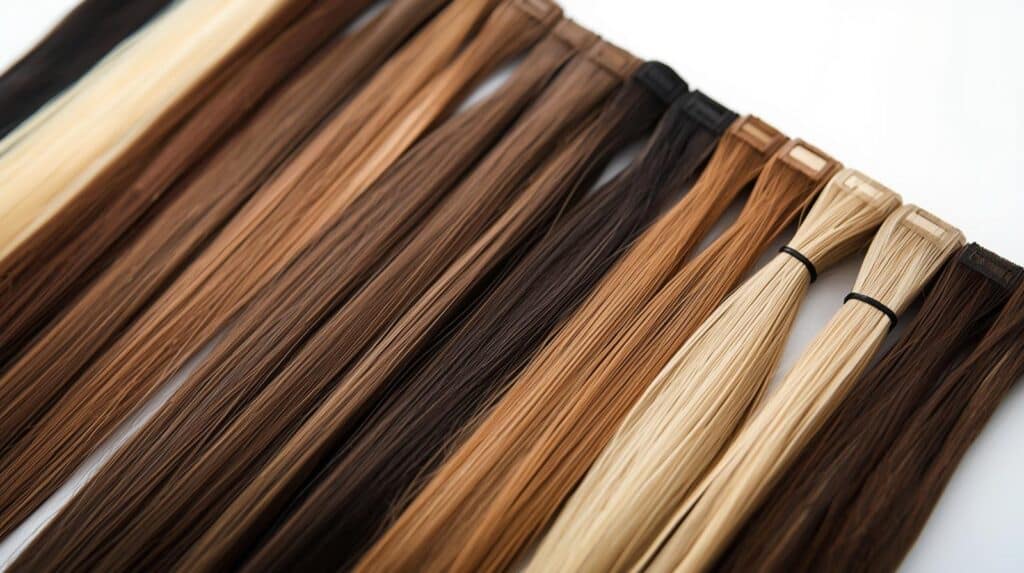
A weft is a strip of extension hair, not a single attachment method.
Depending on its construction, a weft may be fitted with clips or installed using a salon technique. Follow the weft manufacturer’s limits on cutting and adaptation.
Weight depends on the weft and how many rows are used. A sewn-in attachment does not make a heavy set easier for fragile hair to support.
In a traditional braided sew-in, the stylist creates a braided foundation and stitches the weft onto it. Other weft systems use different foundations.
Both the braid’s tension and the weight attached to it matter. Sewing into a braid does not automatically reduce pulling at the roots.
Some people with sufficient density prefer sew-ins, but curly, coily, coarse, or thick hair is not immune to tension damage.
Consider how you will clean the scalp, dry the foundation, and attend maintenance appointments before choosing this method.
A tight, painful base is a reason to speak up immediately. Do not treat soreness or a headache as a necessary settling-in stage.
How To Pick The Right Extensions
Start with your main goal: a little fullness, a temporary style change, or extra length for everyday wear.
The smallest amount of added hair that meets that goal gives you less weight to manage.
Then consider your hair’s condition, strand thickness, density, and usual styling routine.
If you only want extensions occasionally, removable pieces may fit your routine better than a salon installation.
Clip-ins still need careful fitting, detangling, and storage. They save you scheduled move-up appointments, not all maintenance.
Be honest about recent breakage, bleaching, relaxing, scalp discomfort, or unusual shedding during your consultation.
Fine or sparse hair needs particular care because a small section may have little capacity to support an added weft or panel.
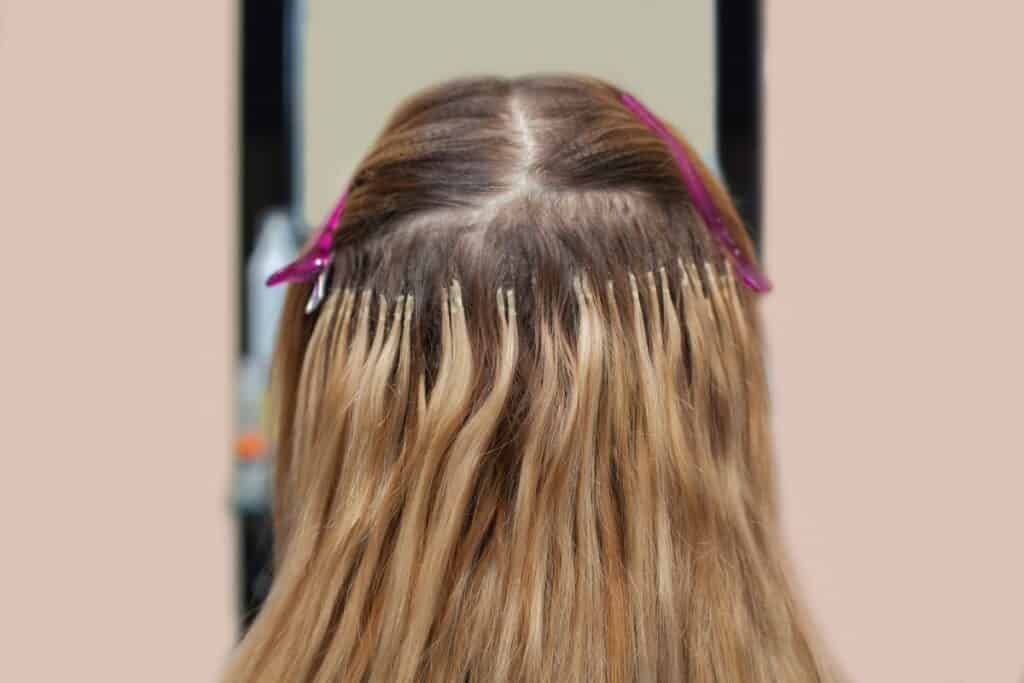
Texture and density are useful starting points, but they cannot tell you on their own whether extensions are appropriate.
Look for a stylist experienced with both your natural texture and the attachment method you want.
They may suggest fewer pieces, a shorter length, different placement, or waiting until your hair is in better condition.
A consultation should include limits as well as possibilities. Be cautious of anyone promising that an installation cannot cause damage.
Fine Hair
Fine hair means individual strands are small in diameter. Low density means there are fewer hairs covering an area; the two can occur together, but they are different.
With low density, clips or tabs may be more visible, and there may be less hair available to support them.
Fine strands can also occur on a densely covered scalp, which may make attachments easier to hide without making the strands damage-proof.
Aim for a modest change in fullness rather than assuming a long, heavy set will be the best match.
Lightweight clip-ins may work for occasional wear if there is adequate healthy hair to hold them. Remove any piece that pulls or slips rather than repeatedly tightening it.
Tape-ins may be considered after a professional assessment, but their flat shape does not eliminate tension. If your hair is actively thinning, seek a dermatologist’s advice before adding attachments.
Medium Hair
With medium-density hair, several methods may be possible, depending on strand condition and the areas being fitted.
Avoid treating medium density as permission to add unlimited weight. Damaged ends and fragile roots still need consideration.
A stylist may discuss a light weft installation if there is enough healthy hair for its foundation.
Tape-ins are another possibility when their placement works with your normal parting and hairstyles.
For occasional use, clip-ins let you compare the look and feel of added hair without committing to continuous wear.
Thick Hair
Thick hair may need more extension hair for a convincing blend, but more pieces also mean more weight. Coarse strands, high density, and a curly pattern are separate characteristics.
A stylist can help match the weft construction and attachment method to your hair rather than choosing from texture alone.
Matching the curl pattern and getting a suitable blending cut can reduce the urge to use frequent heat styling to make two textures look alike.
Consult With Your Stylist
Other options include beaded and bonded systems, each with its own attachment and removal requirements. “No glue” does not mean “no pulling.”
Ask your stylist which method suits your hair now, how much weight they plan to add, and what would make them advise against installation.
Request the full cost of fitting, maintenance, removal, and any replacement hair. Ask what to do if a piece slips or becomes uncomfortable between visits.
Before leaving, get a care plan you can follow at home, including products, washing, drying, and the next appointment.
How To Maintain Your Extensions To Reduce Damage
Good maintenance helps limit tangles and handling damage, but it cannot compensate for an installation that is too tight or heavy.
Matted roots can make removal difficult. If tangles gather near attachments, contact your stylist before they become harder to separate.
For salon extensions, ask for written instructions specific to the system and the hair used.
Human hair and synthetic pieces can have different washing and heat limits. Follow the product guidance rather than assuming all extension hair behaves like your own.
Clip-Ins
Remove clip-ins after wear and detangle them separately, supporting the top of each piece so you do not pull against the clips.
Check the clips for rough edges or trapped hair. Do not keep using a damaged clip that catches your natural strands.
Wash the pieces according to their care label, let them dry as directed, and store them without tangling. Heat tools should only be used if the hair is rated for them.
Keep caring for your own hair between wears. Washing and conditioning help with manageability, but do not make fragile areas suitable for clipping.
The video below from Luxy Hair demonstrates washing clip-in extensions. Follow your own set’s care instructions if they differ.
Wefts/Sew-Ins
For sewn-in wefts, the care routine needs to cover your natural hair and scalp beneath the extensions.
Ask your stylist to show you how to wash between rows and dry the foundation thoroughly without rough handling.
Salon guidance, such as True Weave Spa’s FAQ section, can help you prepare questions. Confirm your own maintenance and removal dates directly with the stylist rather than treating one salon’s schedule as universal.
Do not wait for a routine appointment if the foundation hurts, mats, or becomes difficult to keep clean. Repeatedly tightening a style is not a substitute for reassessing the fit.
This video from Taylor Ramirez discusses washing hair with extensions. Your installation may need a different technique, so check with your stylist.
Tape-Ins
Tape-ins need care around the adhesive panels as well as regular salon maintenance.
Book the recommended move-up or removal appointment before leaving the salon. The useful life of reusable extension hair is different from how long one installation can remain in place.
Keep oils, conditioners, and other products away from the tape area when your system’s instructions require it. Ask which products are compatible instead of guessing.
Detangle gently using the recommended tool while supporting the hair above the tangle. Follow the system’s drying guidance, avoid sleeping with wet attachments, and keep hot tools away from the tabs.
The video below by Kirstie Roche covers washing tape-in extensions. Use it alongside the directions for your specific adhesive system.
Hair Loss And Warning Signs
Extensions can cause traction alopecia, hair loss linked to repeated pulling. The British Association of Dermatologists explains that early traction-related loss may improve when tension stops, but prolonged pulling can cause permanent loss.
Repeated pressure at attachment points can affect particular areas. Watch for a widening part, thinning edges, or short broken hairs where pieces sit.
Pain, persistent itching, bumps, or visible thinning deserve attention. Stop using removable pieces and arrange prompt professional removal of attached extensions; seek a dermatologist’s assessment for scalp symptoms or hair loss.
Some naturally shed hairs can remain caught in longer-wear attachments and appear during removal. That does not mean every amount of shedding or every thin patch is normal.
New gaps, marked loss of density, or scalp pain should not be dismissed as simply adjusting to less volume. Have the cause assessed before fitting another set.
Our article on how to get your volume back. discusses hair that feels thinner after extensions. Use it for additional context, not as a substitute for assessing new or persistent hair loss.
The Takeaway
The least damaging choice depends on how much healthy hair you have to support the extensions and how you plan to wear them.
Clip-ins, tape-ins, and sew-ins all have limitations. Good fitting and maintenance reduce risk without removing it entirely.
For an occasional style change, lightweight clip-ins can be a manageable starting point if your hair can comfortably support them.
Remove them after wear and avoid repeatedly loading fragile areas.
For daily wear, tape-ins or wefts require a more detailed consultation and a realistic maintenance budget.
Choose a stylist who can explain why the method suits your hair and how it will be removed safely.
Keep the focus on your natural hair throughout the appointment and between visits.
The American Academy of Dermatology advises taking breaks from extensions and speaking up if an installation hurts or feels too tight.
A care routine should be practical enough to follow, with time to clean, detangle, and dry the hair as directed.
You may find that fewer pieces or a shorter length gives you the fullness you wanted with less to manage.
If your scalp is uncomfortable or your hair is thinning, protect what is underneath before adding more on top.
Related Articles
Do Hand-Tied Extensions Cause Damage?
Best Body Washes With Glycolic Acid (AHA)
Can You Use Glycolic Acid Every Day?