
CeraVe Moisturizing Lotion Vs Cream
If you’re entering the skincare world for the first time, you know how easy it is to feel overwhelmed!
With a million different products targeting a million different skin issues, it’s hard to find your tried-and-true holy-grail favourites.
Among the brands that run the skincare community is CeraVe. CeraVe prides itself on being the #1 skincare brand recommended by dermatologists.
All of their products are extra gentle and formulated with conditions like acne, psoriasis, and dry skin in mind.
But even if you’re just in the market for a cleanser that offers extra hydration, or a moisturiser with anti-ageing properties, CeraVe has got your back.
A couple of their products that made waves in the moisturiser realm are their daily moisturising lotion and their moisturising cream.
Both of them have their benefits and can be used for varying types of skin conditions – but how can you find your perfect fit?
Once you take a look at the formula and feel of the lotion, as well as your own skincare concerns, you’ll be able to choose which moisturiser works best for you.
So, CeraVe Moisturising Lotion vs. Cream – what’s the difference?
The difference between these CeraVe products is that the lotion is best for mild dryness on normal to oily skin, while the cream is best for heavier-duty skin conditions and extremely dry skin.
In this article, we’ll explain the differences between the moisturisers and which skin type each one would suit best.
The Formulas
The CraVe claim to fame is the addition of 3 essential ceramides that help strengthen and protect the skin’s natural moisture barrier (aka the first line of defence against irritants and acne-causing agents).
These ceramides are in every one of their products and work in tandem with other meticulously chosen ingredients to address the particular skin concerns you’re looking to remedy.
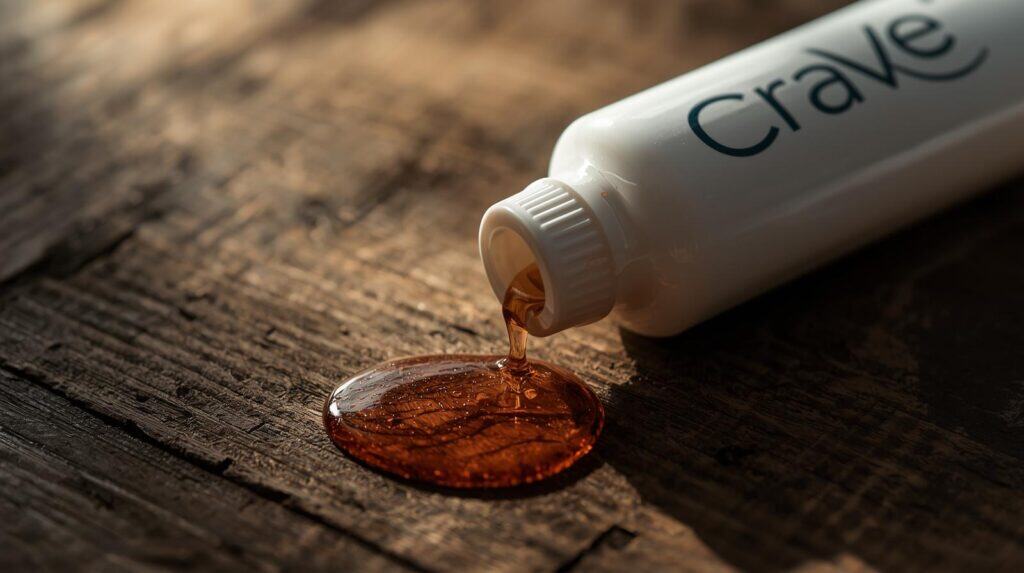
So, who can benefit from their ceramide mixture? Well, just about anyone! Ceramides naturally occur in your body, and are the lipids that make up at least 50% of your skin’s moisture barrier.
While everyone has ceramides, it’s possible that you’ve lost a percentage of them over time due to things like sun exposure, over-exfoliation, or lack of proper skin care in general.
Adding additional ceramides into your daily skincare routine will replenish your skin and bring it back to its healthiest, bounciest state.
Think of ceramides as the bonding agent between your cells on your face.
If they’re strong, you have an effective defense system for keeping all the yucky gunk out.
But if they’re weak, your skin has no protection and no way to lock moisture in.
CraVe has concocted a formula of 3 ceramides identical to the ceramides naturally formed in your body.
This means their products are universally loved, as you’re not introducing your skin to any formulas that are too foreign.
After regular use of CeraVe products, including their Daily Moisturising Lotion and Moisturising Cream.
Your skin will have balanced, normal lipid levels and a restructured moisture barrier that will keep your skin baby-soft, textureless, and healthy.
CeraVe also has a patented product delivery system called MVE (Multivehicular Emulsion), which helps keep the moisturiser working harder for longer.
Whenever you use a CeraVe product, you’re smoothing tons of MVE spheres onto your skin.
These spheres are made up of layers of ceramides, moisturisers, and fatty acids.
Over time, these layers will dissolve when mixed with heat and the natural oils on your skin.
They’ll fully dissolve after 24 hours, so your skin will receive the love it needs long after your initial application.
How Are The Lotion And Cream Formulas Different?
If you’re looking at the CeraVe Daily Moisturising Lotion as a contender to join your skincare regimen.
You can rest easy knowing that you’ll have the benefits of MVE technology and the power of the 3 naturally occurring ceramides in your product.
Additionally, this lotion contains hyaluronic acid and dimethicone.
Hyaluronic acid in skincare acts as a humectant, an agent that helps the skin retain water and other hydrating ingredients.
By locking in moisture, it also supports collagen production and minimises the appearance of fine lines and wrinkles.
If you’re in the market for seriously plump skin, you’ll love this lotion.
Dimethicone is another active ingredient in this moisturiser, and for good reason! Do you yearn for the feel of slippery skin? Skin so smooth that it’s almost glass-like?
If so, dimethicone is your new best friend. Dimethicone gives your skin that glide that skin loses over time.
It also acts as a lightweight way to coat your skin in moisture and protection.
So, if you’re looking for some hydration without the weight and heaviness that other moisturisers can come with, the CeraVe Daily Moisturising Lotion may be a good choice for you.
It’s marketed for normal to dry skin types, so you may want to steer clear if your skin is on the oily side.
It’s clearly labelled as a lightweight moisturiser, so we would definitely use this in the AM alongside your favourite sunscreen.
If you wear makeup, choosing a light moisturiser will prevent your cosmetics from sliding around your face throughout the day, so that’s something to keep in mind as well.
If you’ve been in the skincare game for a while, you’re probably aware that a cream is going to be thicker than your run-of-the-mill lotion- and the CeraVe Moisturising Cream is definitely no exception.
Of course, you’ll be getting all the goodness of ceramides and MVE technology, but you’ll also be introducing your skin to the love that petrolatum has to offer. This cream also has dimethicone, but unlike the Daily Moisturising Lotion, it doesn’t have hyaluronic acid.
Contrary to popular belief, the use of petroleum in moisturisers is unlikely to harm your skin. That is, if you have the right skin type.
If your skin is acne-prone or extra sensitive, you may want to talk to your dermatologist to see whether adding petrolatum to your skincare routine will aggravate any existing conditions.
Petrolatum quite literally acts like a “lock” for your skin.
Any skincare, treatments, etc. that you apply prior to this cream will be trapped beneath a moisturising surface, leaving them to work their magic on your skin without being interrupted by dirt, pollution, or other particles that may disrupt your day.
But just like petroleum jelly, petrolatum is very thick.
So thick in fact, that we probably wouldn’t recommend this as a daytime moisturiser as it’ll definitely give your skin some extra sheen.
But if your skin is in the normal-to-extra-dry range, we think you’ll fall in love with this cream as a nightly moisturiser.
If you love your skin, you’re gonna want to harbour as much moisture as you can.
Keeping your skin healthy is one of the main ways to fight acne, so using this cream to heal your skin barrier every single night will only benefit you!
So, let’s break these two options down in terms of formula and feel:
| Daily Moisturizing Lotion | – Heavy cream – Additional benefits of Petrolatum (petroleum jelly) and Dimethicone – Great for shielding your skin from outside irritants – Marketed for normal to extra dry skin (especially those with eczema!) – Good choice for nightly moisturiser – Has healing, skin renewing qualities |
| – Lightweight – Additional benefits of Hyaluronic Acid and Dimethicone – Great if you want the look of “glass skin.” – Marketed for normal to dry skin – Good choice for a daytime moisturiser – Has plumping qualities | – Heavy cream – Additional benefits of Petrolatum (petroleum jelly) and Dimethicone – Great for shielding your skin from outside irritants – Marketed for normal to extra dry skin (especially those with eczema!) – Good choice for nightly moisturiser – Has healing, skin-renewing qualities |
Your Personal Skin Concerns
CeraVe prides itself on being an eczema-friendly brand.
In fact, the National Eczema Association has granted the brand its seal of approval, meaning that their products don’t use known irritants for those with eczema.
This is a huge deal in the skincare community, and can help those suffering from preexisting skin issues make more informed decisions about what they’re using on their skin- especially if it’s on a daily basis.
The brand’s simplicity has drawn crowds from all ages, backgrounds, and skin types. It’s not the #1 brand dermatologists recommend for no reason.
The brand was formulated with the help of skincare experts, and the products were given their seal of approval prior to hitting the shelves.

We’re so lucky to be consumers in an age when the benefits of the ingredients in our skincare routines are given so much importance.
Dermatologists have noticed an uptick in patients showing genuine curiosity about the products they’re told to use, and even the average buyer will spend a little more time ensuring that their skincare is actually good for them (and not just because it comes in a pretty-looking bottle).
What’s fantastic about CeraVe is that it offers high-end skincare at an affordable price. By keeping their products as basic as possible, they’re opening the door for everyone, with all different types of skin concerns, to use their products with the reassurance that they’ll actually work.
If you have sensitive skin, you can find your entire skincare routine with CeraVe. Since they keep their ingredients as basic as possible, you don’t need to worry about irritating your skin with aggressors that you may not be used to.
Another benefit of keeping your skincare routine as simple as possible is that you can use additional skincare products (like serums, chemical exfoliants, and toners) without overburdening your skin.
So many moisturisers nowadays contain mixtures of multiple AHAs, BHAs, and essential oils that make it hard to use additional products without worrying about unwanted reactions.
This makes CeraVe products great for those who like to layer their skincare.
In terms of their Daily Moisturising Lotion, we think this is a great pick for someone just starting to find their perfect skincare routine.
It’s low-maintenance, no-fuss, and doesn’t contain ingredients that could cause your skin to purge.
It’s a great pick for those with sensitive skin, those who are looking to strengthen their moisture barrier (but haven’t done much damage to it in the first place), and those with existing skin issues like eczema, psoriasis, and pityriasis.
If your skin is a bit more mature, we think this is a great moisturiser to use alongside other anti-ageing products.
The addition of hyaluronic acid will help plump and hydrate your skin without overwhelming it with too many anti-ageing formulas.
The addition of hyaluronic acid will help fill in any creases and act as a temporary “remedy” for wrinkles.
Should your skin be lightly to moderately dry, we think this is also a good moisturiser to add to your daily self-care regimen.
The trick with hyaluronic acid is that it’s most effective when applied while the skin is still damp – that way, there’s excess moisture already on the surface of the skin that the acid can seal in place.
This will ensure that you make the most out of your moisturiser!
If you’re leaning more towards the Moisturising Cream for your choice of moisturiser, there are a couple of things to keep in mind.
Firstly, this is a fantastic choice if you have severely dry skin.
Whether you’re dealing with a bad case of eczema, psoriasis, or you’re suffering from flaky patches, this cream will give your skin a boost of moisture that most moisturisers can’t give.
This moisturising cream doesn’t contain hyaluronic acid; instead, it contains hyaluronate. They’re in the same family, but hyaluronate has a lower molecular weight.
If hyaluronic acid traps in moisture, hyaluronate protects and lubricates the tissue. That means you don’t need to apply this cream to damp skin for it to infuse your skin with much-needed hydration.
Do a quick skin check to see if your skin has a damaged moisture barrier.
A lot of people mistake a damaged barrier for just overly oily, acne-prone, or even uber-dry skin, when in reality, most of their skin woes could be solved with a gentle moisturiser.
If your skin is suddenly super sensitive, red, itchy, flaky, or breaking out, you’re probably in need of some serious healing.
This cream is a great choice for that, especially if you use it every day!
If you’ve had oily skin all your life and know that it isn’t caused by a damaged skin barrier, we would urge you to shy away from using a thick cream as a moisturiser.
Oily skin would probably benefit from something more lightweight. A rich cream, while hydrating, will only emphasise the oil on your face and could potentially make it worse.
Here’s the skinny on which moisturiser to choose for your skin concerns:
| Daily Moisturizing Lotion is Best For: | Daily Moisturising Lotion is Best For: |
| – Beginning skincare enthusiasts – Sensitive skin – Lightly damaged moisture barriers – Those with mild cases of eczema, psoriasis, etc. – Those with lightly oily, to mildly dry skin types – Mature skin | – Those well-versed in what their skin needs – Sensitive skin – Extremely damaged moisture barriers – Those with more prominent skin conditions – Those with normal to extremely dry skin |
When To Use A Lotion Vs. Cream
Finding your perfect skincare routine involves a lot of trial and error.
You’re going to make a lot of mistakes before you figure out what the best products to use are, but you also have to keep in mind that when you use them is just as important.
Just as you wouldn’t use an AM serum in your nightly routine, there are times and places to use a lotion over a cream, and vice versa.
If you live in a particularly cold environment or at a higher elevation, a cream moisturiser might be a better choice for your skin.
Cold weather and thin air tend to suck all the moisture out of your skin, meaning you’re gonna want to seal in all the hydration you can get to keep your skin feeling supple instead of tight and dry.
For those of you in warmer areas or with more tropical weather, using a lotion or a lighter moisturiser will keep your skin feeling soothed without feeling heavy or weighed down.
This type of weather, especially if you live in a high-humidity area, may already have you feeling sticky or dewy.
It’s never a good idea to skip moisturiser, even in humid climates, so finding something delicate (that still gets the job done) is a good choice.
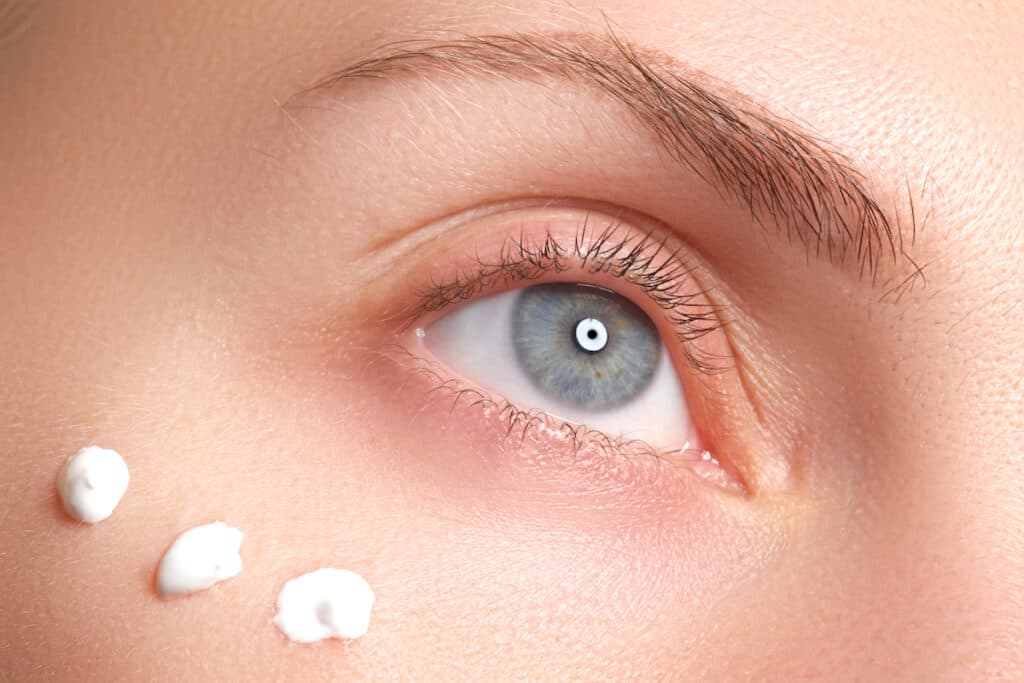
During the winter months, lots of people reach for a thicker moisturiser to soothe their chapped, dry skin.
The popularity of “slugging”—or locking in your skincare with a thick layer of petroleum jelly or Aquaphor—has grown in recent years, and one of CeraVe’s Moisturising Cream’s active ingredients is petrolatum.
It makes it the perfect choice for a good nighttime slug.
Some people swear by this technique year-round, so we suggest trying it out yourself to see how you like it.
Related Questions
Should moisturiser be the last step of your skincare routine?
Moisturiser is typically the last step of the skincare routine, as it locks all the previous steps into place, but there are some exceptions!
For those with severely dry skin, applying a face oil on top of a moisturiser can provide extra relief.
For those with more mature skin, you should apply an eye cream on top of your moisturiser.
Does CeraVe use steroids?
It’s been a long-time myth in the skincare community that CeraVe products contain steroids, and that’s what makes them so effective in helping out your skincare concerns.
While their products are magical, we can assure you that they do not contain steroids.
They’re gentle, safe to use daily, and you can stop using them without your skin reacting adversely (as it would if the products contained steroids).
Related Articles
Does Shea Butter Lighten Skin?