
How To Use Beard Butter
There are so many skin and hair care products that boast supple skin and shiny locks, but what about products to keep beards feeling healthy and hydrated?
There is a whole market of products specifically designed to target and care for beard hair, as it requires a little extra attention.
The beard care items range from oils, creams, waxes, balms, and butters.
Beard butter sits between a leave-in conditioner and a light styling product, helping soften beard hair while adding emollients to the skin underneath.
The skin under facial hair can become dry, itchy, or irritated, especially during early beard growth or when cleansing and grooming habits are too harsh.
Beard butters can help soften coarse hair, reduce a dry feel, and provide light control for medium to long beards, although they do not treat every cause of itch or flaking.
What is the best way to use beard butter?
Beard butter is often easiest to spread through a clean, slightly damp beard after showering, but it can also be used on dry hair. Start with a small amount, work it through the beard and skin, and add more only if needed for softness or light hold.
Whether the beard hair is long or short, we discuss in depth below what beard butter is, its best uses, and why it differs from other beard care products.
What Is Beard Butter?
Beard butter is a thick leave-in grooming product made with emollients such as plant butters and oils to soften beard hair and reduce a dry feel.
It can also coat the skin under the beard with emollient or occlusive ingredients, although a dedicated facial moisturizer may be a better fit if you are acne-prone, very oily, or sensitive to fragrance.
Beard butter is usually thicker than beard oil and typically softer and less wax-heavy than a beard balm.
You can use beard butter during the day or at night if your skin tolerates it, but frequency should depend on how dry your beard feels and whether the product causes greasiness or clogged pores.
Along with providing moisture to the hair, beard butter can work as a light styling cream.
Many formulas offer light hold, which can help smooth flyaways in longer or coarser beards without the stiffness of a waxier balm.
You can even make your own beard butter with simple ingredients!
Why Use Beard Butter?
Beard hair can feel coarse and the skin underneath can become dry, so some people benefit from a leave-in conditioning product.
Beard hair is often coarser than scalp hair, but the skin underneath is not automatically more sensitive for everyone.
Using a beard butter can soften the hair and reduce dryness on the skin underneath when the formula suits your skin.
It does not make beard follicles grow faster or create new facial hair, but softer, less brittle hair may be easier to maintain at longer lengths.
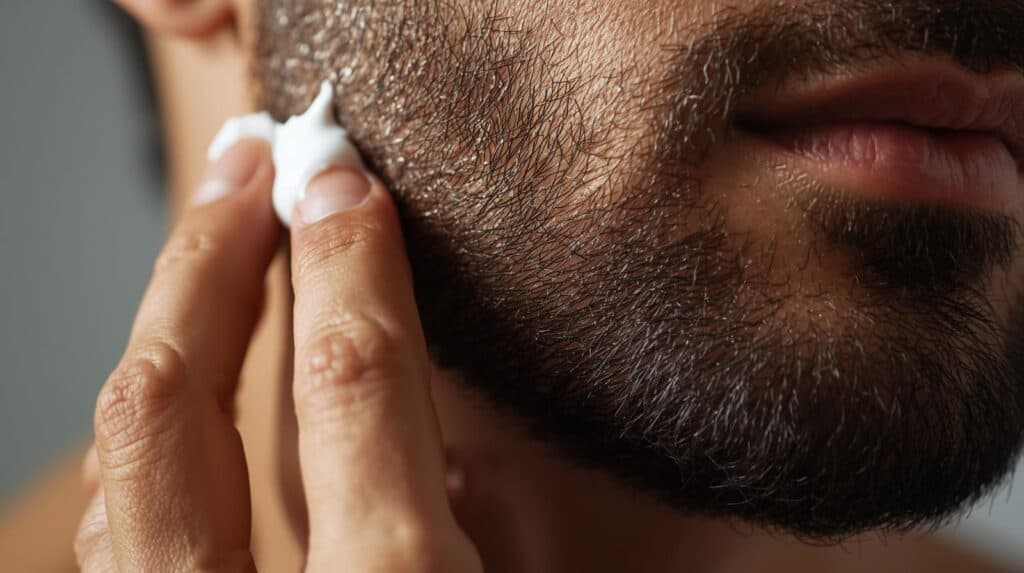
Beard hair is often coarser and more wiry than scalp hair, with texture that varies considerably between individuals.
Coarse facial hair can feel dry, and the skin underneath may also become flaky if it is overcleansed or not moisturized adequately.
Beard butter coats the hair with emollient and occlusive ingredients that can reduce roughness and slow moisture loss.
New beard growth can feel itchy because of short coarse hairs, dry skin, friction, shaving irritation, or other skin conditions.
A fragrance-free beard butter may help if the itch is mainly from dryness, but persistent redness, scaling, painful bumps, or severe itching can have other causes and may need a different treatment.
Depending on the length of the beard, as well as the amount and type of hair, styling can be rugged as the hair can be unruly.
Beard butters work particularly well for medium to long beards that require a styling product with a light hold, avoiding stiffness or intensity, similar to a styling wax.
Beard butters can provide light grooming while making coarse hair feel softer and more conditioned.
How To Use Beard Butter
Beard butter can be used once or twice daily if needed, but it is not automatically a substitute for facial moisturizer, especially on acne-prone or sensitive skin.
Beard butter can be used in combination with other beard care products, such as styling waxes, or on its own.
As with most haircare products, the amount of beard butter used depends on the length, style, and hair type of each individual’s beard.
After cleansing or showering, apply a small amount of beard butter to towel-dried or slightly damp hair, or use it on dry hair when you only need light styling.
For a longer beard, gently detangle first with your fingers or a wide-tooth comb so the product can be spread more evenly.
After combing through the beard, take the necessary amount for the specific beard and massage the product upwards into the skin.
Working the product upward can help it reach the skin underneath the beard, then you can smooth the hair back down into place.
After the skin and hair are thoroughly coated, work the remaining product in downward motions to coat each hair and begin to work the hairs into place.
After the product has been thoroughly massaged into the hair and evenly distributed, comb through again with the wide-tooth comb to style as desired.
Hold varies by formula, beard length, humidity, and how much product you apply, so very unruly hair may still need a balm or wax.
Here’s a great tutorial from Live Bearded on YouTube.
Short Vs Long Beards
Beard butter can work for many beard types, but richer formulas may feel too heavy on very short, fine, oily, or acne-prone skin.
Medium to long beards often benefit most because there is more coarse hair to soften and style.
For a newly growing beard, a simple fragrance-free butter or moisturizer may reduce dryness-related itch, but not every itch is caused by dryness.
Beard butter may reduce mild flaking caused by dry skin. Ongoing greasy scale, redness, or persistent “beard dandruff” can be seborrheic dermatitis or another skin condition and may need medicated care.
Best Types Of Beard Butter
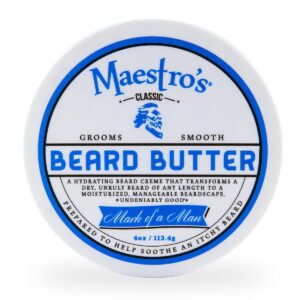
Beard butters are a rich cream formula that is emollient and easy to spread.
Many beard butters use ingredients such as shea butter, cocoa butter, mango butter, or plant oils as the emollient base.
These ingredients mainly work as emollients and occlusives, helping reduce roughness and soften hair and skin.
Formulas may also contain oils such as jojoba or avocado, which can improve slip and softness.
Some formulas include essential oils for fragrance, but fragranced essential oils can irritate or trigger contact dermatitis in sensitive skin.
Maestro’s Beard Butter is one example of a scented formula; if your skin is reactive, compare the fragrance and ingredient list before buying.
Brand claims about “anti-itch” benefits should be treated as product marketing. Beard butter can condition hair, but hair follicles themselves are not something a leave-in product can “detangle.”
Beard Butter Vs. Balm
Beard butter is often compared to beard balm, and while both beard care products are similar, they ultimately achieve different results when applied to the beard.
The main difference is usually texture and hold. Beard butter tends to be softer and more conditioning, while beard balm often contains more wax for stronger shaping. Either can contact and condition the skin depending on the formula.
Beard butter usually has a softer butter-and-oil texture, while balm is typically firmer because it contains more wax. Both mainly coat the hair surface rather than deeply “absorbing” into the hair shaft.
Beard balm has a firm wax texture that typically needs to be warmed in the palm before being applied to the beard, allowing it to be spread easily and evenly.
While the beard balm will eventually melt into the beard hairs like butter, the consistency between the two formulas is another differing factor.
Beard balms usually provide more styling control than butters because of their wax content.
If your beard needs more structure or flyaway control, a balm may suit you better than a soft butter, although hold strength varies by product.
Both balms and butters can be used on dry or slightly damp beards. The better choice depends on whether you want more conditioning, more hold, or both.
Both beard balm and beard butter can be used together; however, depending on the preference and needs of the beard.
Conclusion
While it may be easy to focus on finding the right skincare products or a shampoo and conditioner combo that suits your skin type and hair type.
If your beard feels rough, dry, or difficult to manage, conditioning products may help improve softness and grooming.
You do not always need a beard-specific product, but facial hair is often coarser than scalp hair, so richer leave-in products can feel more suitable.
The skin under the beard can also become dry, acne-prone, or irritated depending on your skin type and grooming routine.
Choose products based on your actual needs rather than the label alone. A simple facial moisturizer, beard oil, butter, balm, or combination may all work depending on your skin and beard texture.
Beard oils can reduce roughness and add shine to beard hair while also spreading over the skin underneath.
Beard balms add conditioning ingredients with more wax-based hold than most beard butters.
Beard butter can be used whenever you need more softness or light control, provided the formula does not irritate or feel too heavy on your skin.
Many formulas also provide a light styling effect, although hold is not guaranteed to last all day.
Beard butters combine hair-conditioning and skin-emollient functions in one product.
That makes them useful when you want one product for beard softness plus light styling and skin comfort.
When Beard Itch Needs More Than Beard Butter
If the skin under your beard stays red, greasy, scaly, painful, or very itchy despite gentle cleansing and moisturising, the cause may be more than simple dryness. Seborrheic dermatitis, folliculitis, acne, ingrown hairs, contact dermatitis, or fungal infection can all affect the beard area.
Stop using a beard product if it consistently causes burning, swelling, breakouts, or worsening flaking. Fragrance and essential oils are common reasons a grooming product can irritate sensitive facial skin.
Beard Butter FAQs
Does Beard Butter Make Your Beard Grow Faster?
No. Beard butter can condition existing hair and reduce breakage, but it does not create new follicles or significantly speed up beard growth.
Should You Put Beard Butter On The Skin?
You can work a small amount into the skin underneath the beard if the formula agrees with your skin. If you are acne-prone or very oily, use less product and avoid heavy or strongly fragranced formulas that make breakouts worse.
Can You Use Beard Butter Every Day?
Yes, if your beard feels better with daily use and your skin tolerates it. Start with a small amount because using too much can make the beard look greasy or leave residue on the skin.
Is Beard Butter Better Than Beard Balm?
Neither is universally better. Butter is usually softer and more conditioning, while balm normally provides stronger hold because it contains more wax. Choose based on how much conditioning and styling control you want.
Related Articles
Best Hair Straighteners For Guys